Is smallcase safe? What risks should investors know before buying their first smallcase?
Wednesday, Feb 18, 2026
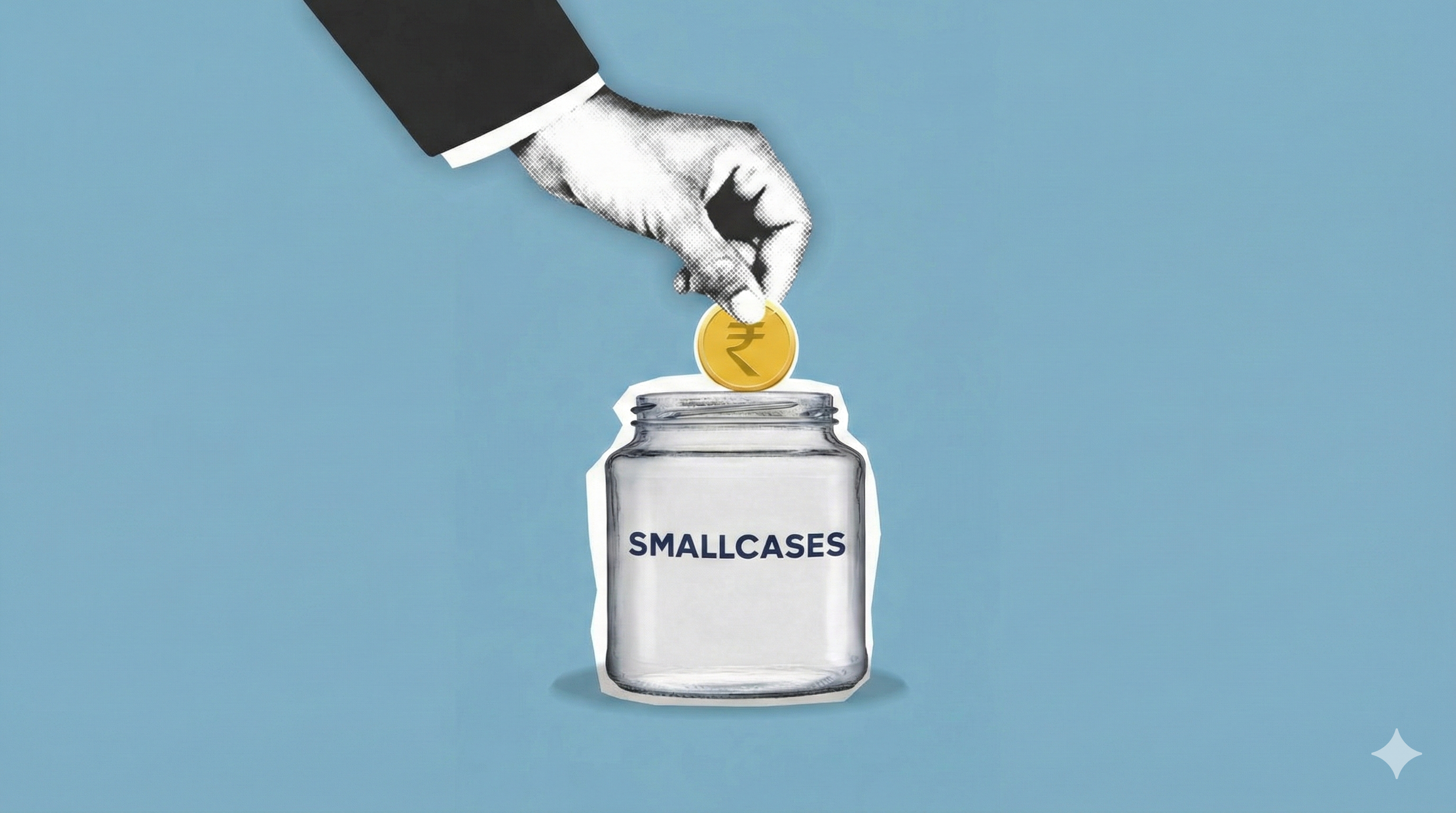
Investing does not involve pursuing the best returns to most people. It is the preservation of hard-earned money with the possibility of growing steadily over the course of time. Smallcases might be a comfortable compromise between picking stocks individually and mutual funds, in case you are new to equity investing. Nevertheless, there is one question that logically follows before making the first step: is it safe under smallcase?
The brief response is that smallcases are not free of risk, but these are intended to put market participation in a more orderly, comprehensible, and disciplined form. Smallcase investment can be a good starting point in case of beginners who wish to have professional investment ideas without losing control, as long as the risks are well comprehended.
What is Smallcase and Why Beginners Find It Comforting?
A smallcase is a collection of ETFs or stocks based on a specific idea / theme or strategy of investing. You do not have to research dozens of companies by yourself but invest in an already-prepared basket that represents a specific market perspective, e.g. dividends, momentum, ESG, or long-term asset allocation.
Ownership and visibility are what is attractive to first-time investors when it comes to smallcases. The investments are directly held in your demat account hence you will always know where your money is invested. Such transparency decreases blind investment fear particularly among those people who desire to know the market but lack time to conduct research.
Smallcases at Green Portfolio are placed as long-term investment vehicles. They are designed with investors in mind who think that it is better to make small and steady steps towards wealth building than to attempt to time the market. It is a strategy that appeals greatly to salaried workers, entrepreneurs and families who want some form of certainty in an unpredictable economic landscape.
Is Smallcase Safe? Understanding Risk in a Practical Way
Safety in investing does not mean the absence of risk. It means knowing what risks exist and how they affect your money over time. Smallcase investment carries market risk, which means portfolio values will fluctuate in response to broader economic conditions. When markets correct, smallcases will also experience temporary declines.
However, smallcases reduce some common beginner risks by replacing impulsive stock picking with rule-based strategies. Diversification across multiple stocks helps lower the impact of a single company’s poor performance. Over longer periods, this structured approach can feel safer than owning a few unrelated stocks chosen without a clear plan.
Another important aspect of safety is expectation management. Many beginners search for the top smallcase to invest in based on recent returns. While performance history is useful, it should never be the sole decision factor. A smallcase that performed exceptionally well in the past year may underperform in the next phase of the market. True safety comes from aligning the smallcase investment strategy with your risk tolerance, time horizon, and financial goals.
The Risks Investors Should Know Before They Invest in a Smallcase
While smallcases simplify investing, they do not eliminate risk. One key risk is concentration. Some smallcases focus on specific sectors or themes, such as ESG investing, automotive growth, or small-cap stocks. These portfolios may generate strong returns during favorable market conditions but can be more volatile during downturns.
|
Smallcase Type |
Approx. Stocks |
Risk Profile |
Best Suited For |
|
Index-based or Asset Allocation |
30–50 |
Low |
Conservative investors |
|
Thematic or ESG |
20–25 |
Moderate |
Moderate investors |
|
Small-cap or Momentum-based |
10–15 |
High |
Aggressive investors |
Another risk is strategy-related. For example, a smallcase momentum strategy may perform well when markets trend upward but struggle when prices move sideways. Similarly, dividend-focused portfolios may feel slow during strong bull markets but offer stability when volatility rises. These phases are normal and do not indicate failure of the strategy.
Execution risk is often overlooked but equally important. Smallcases require discipline from the investor. Panic selling during market dips, ignoring rebalance alerts, or switching between portfolios frequently can significantly reduce long-term returns. In many cases, it is investor behavior, not the smallcase itself, that determines outcomes.
There is also suitability risk. A portfolio suitable for an aggressive investor in their 30s may be inappropriate for someone approaching retirement. Choosing a good smallcase to invest in is less about popularity and more about personal fit. Green Portfolio emphasizes this alignment to help investors avoid regret-driven decisions later.
Costs, Minimum Investment, and Long-Term Safety
Smallcase minimum investment varies depending on the portfolio. At Green Portfolio, entry points range from around ₹9,000 to ₹20,000 for many strategies, making smallcases accessible across income levels. This flexibility allows investors to start small and increase exposure gradually as confidence grows.
Smallcase investment charges are transparent. These may include platform fees, portfolio management charges, and brokerage costs. While fees exist, they are clearly disclosed upfront. From a safety perspective, transparent costs are preferable to hidden expenses that quietly erode returns over time.
Long-term safety in smallcase investment comes from staying invested through market cycles. Portfolios like dividend-focused strategies, ESG themes, or balanced asset allocation models are designed to smooth volatility and support steady wealth creation. Green Portfolio’s approach focuses on risk-adjusted returns rather than chasing short-term performance, which aligns well with beginner psychology.
Final Thoughts: Is Smallcase Safe for First-Time Investors?
Smallcases are not a shortcut to guaranteed profits, but they are a structured way to participate in equity markets with clarity and discipline. For beginners who want professional investment ideas while maintaining control, smallcase investment can be a sensible starting point.
Safety improves when investors choose portfolios suited to their life stage, understand that volatility is normal, and commit to a long-term horizon. If you are looking to invest in ideas without constant monitoring and emotional stress, smallcases can help bridge the gap between hesitation and action.
Ready to begin with confidence?
Explore beginner-friendly smallcases by Green Portfolio and take your first step toward disciplined, long-term investing.
Share this story


Ready to build wealth?
Ready to build wealth?
 Talk to an expert
Share this story



 Talk To An Expert