What Changes When the Dollar Weakens
Wednesday, Jun 10, 2026
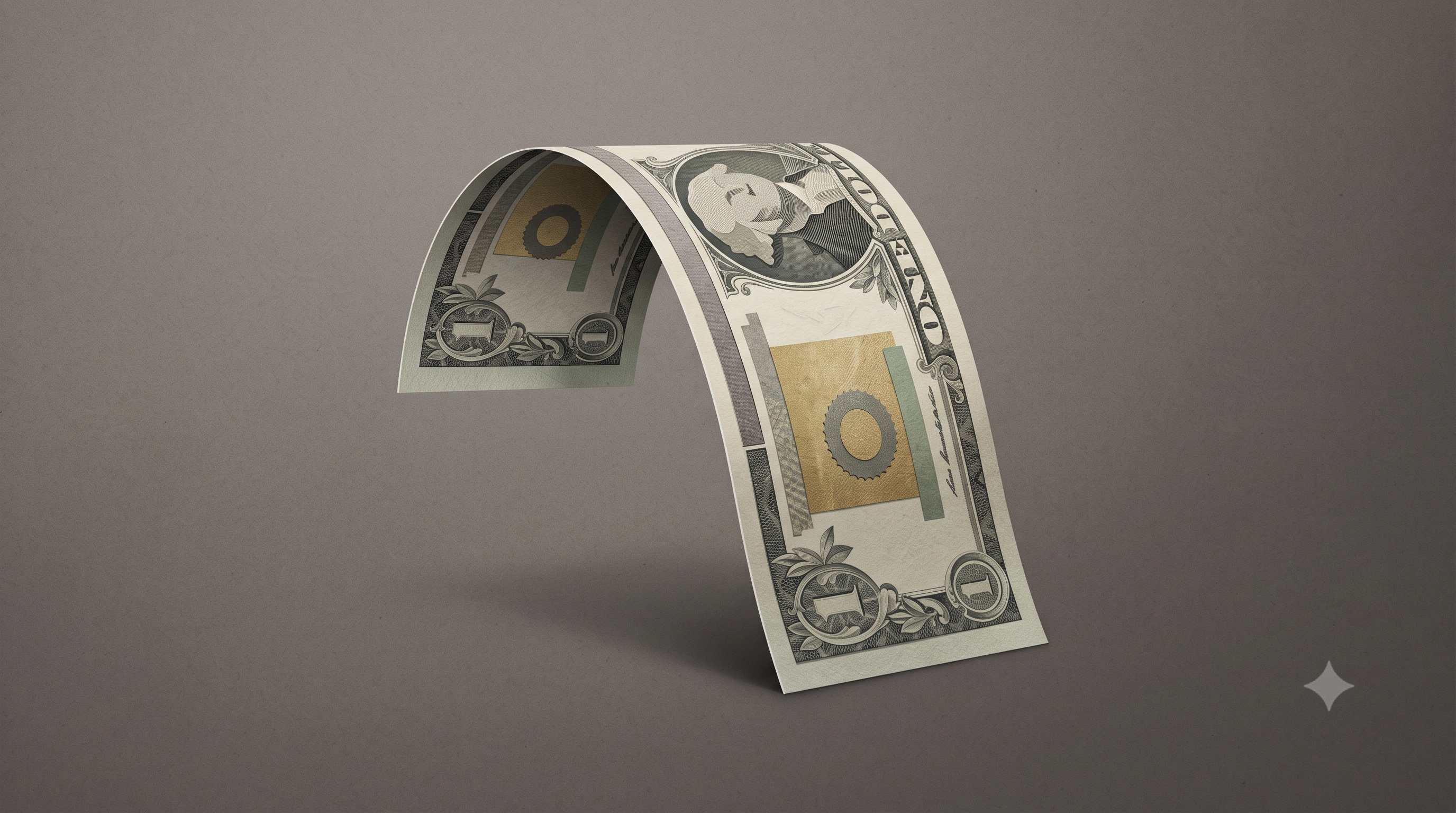
The U.S. dollar has been considered the lifeblood of the international finance system. It is the currency in which the prices of oil, gold and many other commodities are fixed, and the world's major reserve currency. This is the reason the dollar's movements have a global impact on economies, markets, and investment portfolios beyond the U.S. market.
As investors make decisions regarding the evolving global economic landscape in 2026, one question remains: What happens when the dollar weakens?
Although currency fluctuations might seem out of the realm of normal investing, a depreciating dollar can impact capital flows, commodity prices, corporate profits, and stock market sentiment. When considering investment opportunities and planning a long-term investment portfolio, Indian investors should be aware of these effects.
The secret is not to foresee ALL currency movements. Rather, it's about knowing what to anticipate from various assets and sectors throughout the weaker part of the dollar.
What does a weak dollar mean?
A weak dollar, basically, is a dollar that is losing value when compared to other currencies.
Suppose that one dollar trades for ₹87 and then drops to ₹82, then the dollar has depreciated against the Indian rupee. By the same token, the dollar can fall to the euro, yen, pound or a global basket of currencies.
Currency values move because of several factors, including interest rates, inflation expectations, economic growth, government borrowing, and investor sentiment.
Although these factors may seem disconnected from stock investing, they often influence where global capital flows next.
Why Does the Dollar Weaken?
There is rarely a single reason behind a weaker dollar. Instead, it is usually the result of multiple economic forces working together.
One common reason is lower interest rates in the United States. When rates fall, investors may seek higher returns in other markets, reducing demand for dollar-denominated assets.
Another factor is slower economic growth. If investors believe that growth opportunities are stronger outside the United States, capital may begin moving toward other regions.
Government debt and fiscal deficits can also influence long-term currency sentiment. While these factors do not always lead to immediate weakness, they often shape investor expectations over time.
Most importantly, when global investors become more comfortable taking risks, they tend to allocate more capital toward emerging markets and growth-oriented assets rather than keeping money concentrated in traditional safe havens.
Seven Things That Change When the Dollar Weakens
1. Emerging Markets Often Attract More Capital
One of the most important weak dollar effects is the movement of global capital.
When investors become less focused on U.S. assets, they often begin looking for opportunities in economies with stronger growth potential. Countries like India frequently benefit from this shift because of their expanding consumer base, infrastructure development, and corporate earnings growth.
Higher foreign investment inflows can improve liquidity in the market and support investor confidence.
2. Gold Becomes More Attractive
Gold is usually one of the first assets investors discuss during periods of dollar weakness.
Since gold is priced globally in dollars, a weaker dollar often makes gold more affordable for buyers using other currencies. This can increase demand and support higher prices.
While gold should not be viewed as a replacement for equities, it often plays an important role in diversification and risk management.
3. Commodity Prices Can Rise
The relationship between the dollar and commodities extends beyond gold.
Oil, copper, silver, and several industrial metals are also priced in dollars. When the dollar weakens, global demand for these commodities can increase because they become relatively cheaper for international buyers.
This can create opportunities in commodity-linked sectors while also influencing inflation trends.
4. Global Risk Appetite Improves
A weaker dollar is often associated with an environment where investors are more willing to take risks.
Instead of focusing primarily on capital preservation, investors may allocate more money toward equities, emerging markets, and growth-oriented sectors.
This does not guarantee higher stock prices, but it can create a more supportive backdrop for risk assets.
5. Indian Equities May Receive Greater Attention
India remains one of the fastest-growing major economies in the world.
During periods of dollar weakness, global investors often revisit markets that offer long-term structural growth opportunities. As a result, Indian equities can attract additional attention, particularly in sectors linked to domestic growth.
This is one reason many investors monitor currency trends even if they have no direct exposure to foreign exchange markets.
6. Exporters and Importers Are Affected Differently
Not every business benefits equally from a weaker dollar.
Companies that earn a large portion of their revenue in dollars may experience currency translation effects when those earnings are converted into rupees.
At the same time, businesses that rely heavily on imported raw materials may benefit if exchange rate movements reduce costs.
The actual impact depends on the company's business model, pricing power, and global exposure.
7. Asset Allocation Opportunities Emerge
Perhaps the most important takeaway for investors is that a weak dollar can create opportunities to review portfolio allocation.
Different asset classes respond differently to economic conditions. Equities, gold, commodities, and fixed-income investments each react in their own way.
Rather than chasing trends, investors can use these periods to ensure their portfolios remain aligned with long-term objectives.
How Different Indian Stock Market Sectors React
The impact of a weaker dollar varies significantly across industries.
|
Sector |
Potential Impact of a Weak Dollar |
|
Financial Services |
May benefit from stronger capital inflows and market activity |
|
Infrastructure |
Can gain from improving economic sentiment and investment cycles |
|
Manufacturing |
Often benefits from domestic growth and industrial expansion |
|
Consumer Stocks |
May benefit if economic confidence remains strong |
|
Gold & Commodity Companies |
Can gain from rising commodity prices |
|
Information Technology |
Mixed impact due to foreign currency revenues |
|
Pharmaceuticals |
Mixed impact depending on export exposure and currency movements |
What Should Investors Do During a Weak Dollar Cycle?
The biggest mistake investors make is reacting emotionally to macroeconomic headlines.
A weaker dollar does not automatically mean investors should increase exposure to a particular sector. Similarly, a stronger dollar does not necessarily signal that markets are heading lower.
Instead, investors should focus on principles that remain effective across different market environments.
Maintain Diversification
Diversification helps reduce reliance on a single asset class, sector, or economic outcome.
Focus on Quality Businesses
Companies with strong balance sheets, durable competitive advantages, and consistent earnings growth are often better positioned to navigate changing economic conditions.
Avoid Short-Term Predictions
Currency movements are notoriously difficult to forecast. Building a portfolio around short-term macro predictions often leads to inconsistent results.
Stay Aligned With Long-Term Goals
Investment decisions should be driven primarily by financial objectives rather than temporary market narratives.
Building Wealth through Market Cycles, Not Market Predictions
Many investors spend considerable time trying to identify the next big market trend.
The reality is that long-term wealth creation usually comes from consistency rather than prediction.
This is where a milestone-based approach to investing becomes valuable.
An investor working toward a ₹25 lakh corpus faces different challenges from someone managing ₹1 crore or ₹5 crore. Yet the underlying principle remains the same: follow a disciplined process instead of constantly reacting to market movements.
At the early stage, the objective is to build investing habits and maintain consistency. As wealth grows, the focus shifts toward structure, portfolio organization, and risk management.
Eventually, for larger portfolios, capital preservation and wealth protection become increasingly important alongside growth.
This progression reflects an important truth about investing. Most investors do not struggle because of a lack of investment options. They struggle because they lack clarity, structure, and a repeatable framework.
Markets will always present new uncertainties. The dollar may strengthen, weaken, or move sideways. Interest rates will change. Economic cycles will evolve.
What matters most is having a system that remains effective regardless of those changes.
For investors seeking thematic exposure, a smallcase investment approach can offer a structured way to participate in specific market themes. Some investors choose to invest in smallcase portfolios because they prefer a rules-based framework rather than selecting individual stocks themselves.
Questions around smallcase minimum investment, identifying a good smallcase to invest in, or evaluating a smallcase momentum strategy are common among investors exploring thematic investing. Understanding the underlying smallcase investment strategy, reviewing smallcase investment charges, and evaluating a top smallcase to invest or top smallcase to invest in can help investors make more informed decisions. Ultimately, many investors use these frameworks to smallcase invest in ideas that align with their broader financial goals.
Final Thoughts
Understanding what changes when the dollar weakens is not about becoming a currency expert. It is about recognizing how global money flows influence different assets, sectors, and markets.
A weaker dollar can support commodities, improve capital flows into emerging markets, influence sector performance, and create new investment opportunities. However, the most successful investors are rarely those who predict every macroeconomic development correctly.
They are the investors who stay focused on long-term goals, maintain a diversified portfolio, and follow a disciplined investment process.
Market cycles will come and go. Currency trends will change. But a structured approach to investing remains one of the most reliable ways to build wealth over time.
Frequently Asked Questions:
What changes when the dollar weakens?
A weaker dollar can influence commodity prices, global capital flows, emerging market performance, and investor sentiment. It often creates opportunities in sectors linked to growth and commodities.
Are weak dollar effects generally positive for India?
They can be supportive because foreign investors may allocate more capital toward emerging markets such as India. However, outcomes also depend on economic growth, corporate earnings, and market valuations.
Which sectors benefit most when the dollar weakens?
Gold-related businesses, commodity producers, financial services, infrastructure companies, and some domestic growth sectors may benefit during periods of dollar weakness.
Should investors change their portfolio when the dollar falls?
Not necessarily. Most investors are better served by maintaining diversification and focusing on long-term financial goals rather than reacting to short-term currency movements.
How can investors prepare for changing currency cycles?
A disciplined investment strategy, diversified asset allocation, and a goal-based approach can help investors navigate different market environments more effectively.
Share this story


Ready to build wealth?
Ready to build wealth?
 Talk to an expert
Share this story



 Talk To An Expert