What Happens When Countries Stop Using the Dollar
Saturday, Jun 27, 2026
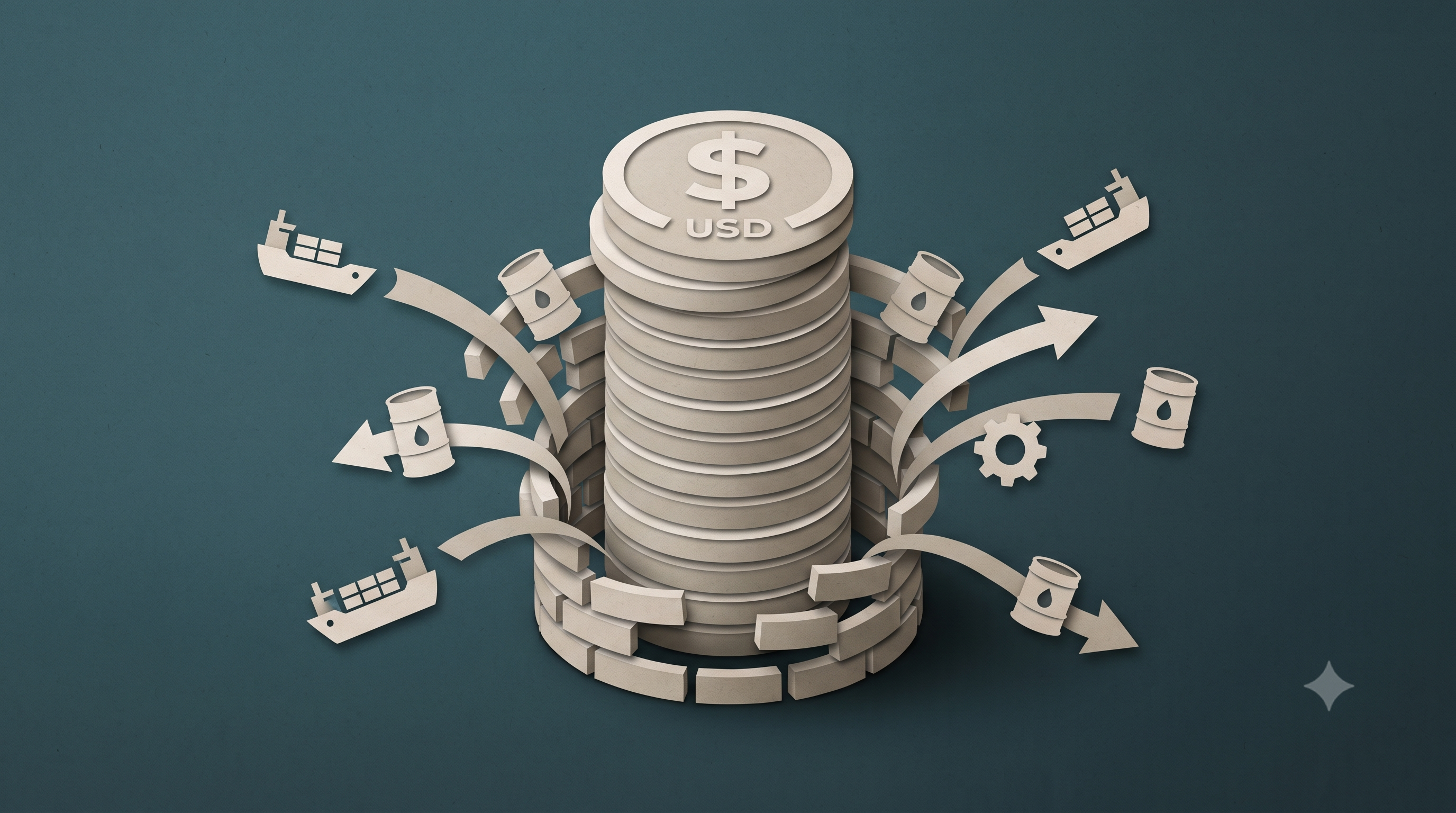
The US dollar has been the most widely used currency in international trade and finance over the last few decades. Countries have used the dollar since its stability, liquidity, and global acceptance have been instrumental in covering their crude oil needs, as well as conducting cross-border business operations. But the idea of lessening reliance on the dollar is gaining traction. Nations are inking trade agreements in local currencies, developing the alternative payment system, and seeking diversification in foreign exchange reserves.
This has sparked an important question among investors: What happens when countries stop using the dollar? Will the world's economies undergo a radical transformation? Are markets going to be more volatile? More importantly, what should investors do on the way to such a change?
The truth is that the dollar is not going to suddenly fall out of favor. Rather, the world economy seems to be moving towards becoming a multi-currency financial system, with a few currencies gaining more weight in international trade. This change should not be viewed as an alarming event, but rather as a chance for investors to familiarize themselves with the global shifts and develop a portfolio that is resilient to economic fluctuations.
In this article, we will look at the trade without the dollar impact, understand how a dollar alternative system is developing, and understand why a disciplined investment system is more beneficial than trying to forecast every geopolitical headline.
Why Is the US Dollar So Important?
The US dollar is the primary reserve currency used worldwide and is playing a major role in international commerce. In most countries, a major component of foreign exchange holdings is dollars, as is the price of most commodities around the world, such as crude oil, in the U.S. dollar.
The dollar's widespread acceptance also provides confidence to governments, multinational companies, and financial institutions. Its deep financial markets and relative stability have made it the preferred currency for international settlements for decades.
Why Are Countries Looking for Dollar Alternatives?
The movement away from the dollar is not about replacing it entirely. Instead, countries are seeking greater flexibility and resilience in an increasingly complex global economy.
Several factors are driving this shift:
- Geopolitical tensions and economic sanctions
- Growing regional trade partnerships
- Stronger domestic currencies
- Diversification of foreign exchange reserves
- Technological advancements like Central Bank Digital Currencies (CBDCs)
This gradual evolution is creating what many economists describe as a dollar alternative system, a financial environment where multiple currencies coexist rather than one currency dominating global trade.
What Happens When Countries Stop Using the Dollar?
Although the transition is expected to be gradual, reducing reliance on the US dollar could reshape global finance in several ways.
1. International Trade May Become More Flexible
Countries could increasingly settle trade in their local currencies instead of using the US dollar as an intermediary. This may lower transaction costs for trading partners and reduce dependence on exchange-rate conversions.
2. Currency Volatility Could Increase
While local currency settlements provide flexibility, they may also expose businesses to greater exchange-rate fluctuations. Companies involved in exports and imports will need stronger currency risk management strategies to protect their profits.
3. Central Banks Could Diversify Their Reserves
Instead of holding most reserves in US dollars, central banks may gradually increase investments in assets such as the euro, Chinese yuan, gold, or other regional currencies. Diversification spreads risk and reduces overreliance on a single reserve asset.
4. Commodity Markets Could Evolve
Some commodities may eventually be priced in currencies other than the dollar. Although this transition would likely take years, it reflects the broader trend toward a more balanced global financial system, as per Green Portfolio’s investment experts.
5. Investment Opportunities Could Shift
Changes in global trade patterns often create new opportunities for businesses operating in manufacturing, infrastructure, technology, renewable energy, and domestic consumption. Investors who focus on long-term structural trends rather than short-term news may be better positioned to benefit from these developments.
Dollar-Based System vs. Dollar Alternative System
|
Factor |
Dollar-Based System |
Dollar Alternative System |
|
Trade Settlement |
Mostly US Dollar |
Multiple currencies |
|
Reserve Assets |
Dollar-dominated |
Diversified reserves |
|
Currency Risk |
Lower for USD users |
Shared across several currencies |
|
Global Trade |
Highly dollar-dependent |
More regionally diversified |
|
Investment Focus |
US-centric |
Global and regional opportunities |
Trade without Dollar Impact on Businesses and Investors
The trade without dollar impact extends beyond governments and central banks. Businesses and investors also need to understand how these changes could influence financial decisions.
Many first-time investors often begin by exploring a smallcase investment because it offers a curated basket of stocks built around a specific strategy or theme. Before deciding to invest in smallcase portfolios, it is important to understand how each strategy aligns with your financial goals instead of focusing only on recent performance.
What Does This Mean for Indian Investors?
India's growing role in manufacturing, digital infrastructure, renewable energy, defence, and pharmaceuticals positions it well in an increasingly multipolar world. As international trade evolves, several domestic sectors could benefit from stronger regional partnerships and expanding export opportunities.
Potential areas of long-term growth include:
- Manufacturing
- Defence
- Railways
- Green Energy
- Pharmaceuticals
- Financial Services
- Consumer Businesses
Rather than trying to predict which sector will outperform every year, investors should focus on companies with strong fundamentals and sustainable competitive advantages.
This is where Green Portfolio emphasizes disciplined investing. Instead of reacting to every market headline, the focus remains on building well-researched portfolios that align with long-term wealth creation rather than short-term speculation.
If you're comparing different investment options, it's equally important to understand factors such as smallcase minimum investment and whether the investment amount fits comfortably within your financial plan. Starting with an amount you can consistently invest is often more valuable than trying to time the market.
Building a Portfolio for a Multipolar World
Diversification continues to play a crucial role because no single country or sector consistently outperforms in every market cycle. Investors should also review their portfolios periodically instead of making frequent changes based on news headlines.
Many investors evaluating thematic investing compare factors such as smallcase investment charges, portfolio composition, and investment philosophy before making a decision. Understanding these aspects provides a clearer picture of the overall value rather than simply choosing the latest market trend.
As per Green Portfolio, themes such as ESG investing, manufacturing, defence, pharmaceuticals, and smart beta strategies offer different ways to participate in long-term economic growth. Likewise, investors searching for a good smallcase to invest in should prioritize strategies that match their risk tolerance, investment horizon, and financial goals instead of selecting portfolios solely because they have delivered high historical returns.
Another popular approach is the smallcase momentum strategy, which focuses on stocks showing strong price trends. While momentum investing can suit some investors, others may prefer diversified or fundamentally driven portfolios depending on their objectives.
For those exploring the top smallcase to invest in, the best choice ultimately depends on personal goals rather than a universal ranking. Similarly, investors interested in smallcase invest in ideas should evaluate whether the underlying investment theme has long-term potential rather than chasing short-lived market excitement.
Green Portfolio encourages investors to adopt a systematic approach where every investment decision supports a larger financial objective instead of reacting emotionally to market uncertainty.
Why a Structured Investment System Matters More Than Predictions
One of the biggest mistakes investors make is believing they need to predict every economic event to build wealth successfully. In reality, long-term investing is more about consistency than forecasting.
Many people accumulate multiple mutual funds, individual stocks, and thematic investments over time without a clear strategy. This often leads to overlapping portfolios, unnecessary complexity, and emotional decision-making during market volatility.
Successful investors understand that discipline often matters more than perfect timing. Regular investing, periodic portfolio reviews, and maintaining a long-term perspective can produce better outcomes than frequently buying and selling based on headlines.
Conclusion
The discussion around what happens when countries stop using the dollar reflects an important shift in the global economy rather than the end of the US dollar's influence. As more countries diversify trade relationships and explore alternative payment systems, investors should expect gradual changes instead of sudden disruption.
Green Portfolio advises that rather than worrying about every geopolitical development, investors can benefit by focusing on diversification, quality businesses, and a disciplined investment strategy. A portfolio built around long-term goals is better equipped to navigate changing market environments than one driven by short-term speculation.
Frequently Asked Questions
1. What happens when countries stop using the dollar?
Countries may increasingly settle international trade using local currencies instead of the US dollar. While this could reduce dependence on the dollar over time, it is expected to create a more diversified global financial system rather than replace the dollar completely.
2. What is the trade without dollar impact on global markets?
Trading without the dollar can lower currency conversion costs for some countries, encourage regional trade partnerships, and diversify foreign exchange reserves. However, it may also introduce greater exchange-rate volatility during the transition.
3. What is a dollar alternative system?
A dollar alternative system refers to a global financial framework where multiple currencies, such as the euro, yuan, or local currencies, are used alongside the US dollar for trade and international payments.
4. How can investors prepare for a changing global financial system?
Investors can prepare by maintaining diversified portfolios, focusing on quality businesses, investing with a long-term perspective, and choosing investment strategies that align with their financial goals instead of reacting to short-term market events.
5. How do I choose the right smallcase for my investment goals?
Green Portfolio advises that before selecting a smallcase, evaluate your risk tolerance, investment horizon, portfolio strategy, and financial objectives. Instead of choosing based only on past performance, compare the underlying investment philosophy, diversification approach, and suitability for your long-term wealth creation plan.
Share this story


Ready to build wealth?
Ready to build wealth?
 Talk to an expert
Share this story



 Talk To An Expert