How India Is Impacted by De-Dollarization
Monday, Aug 3, 2026
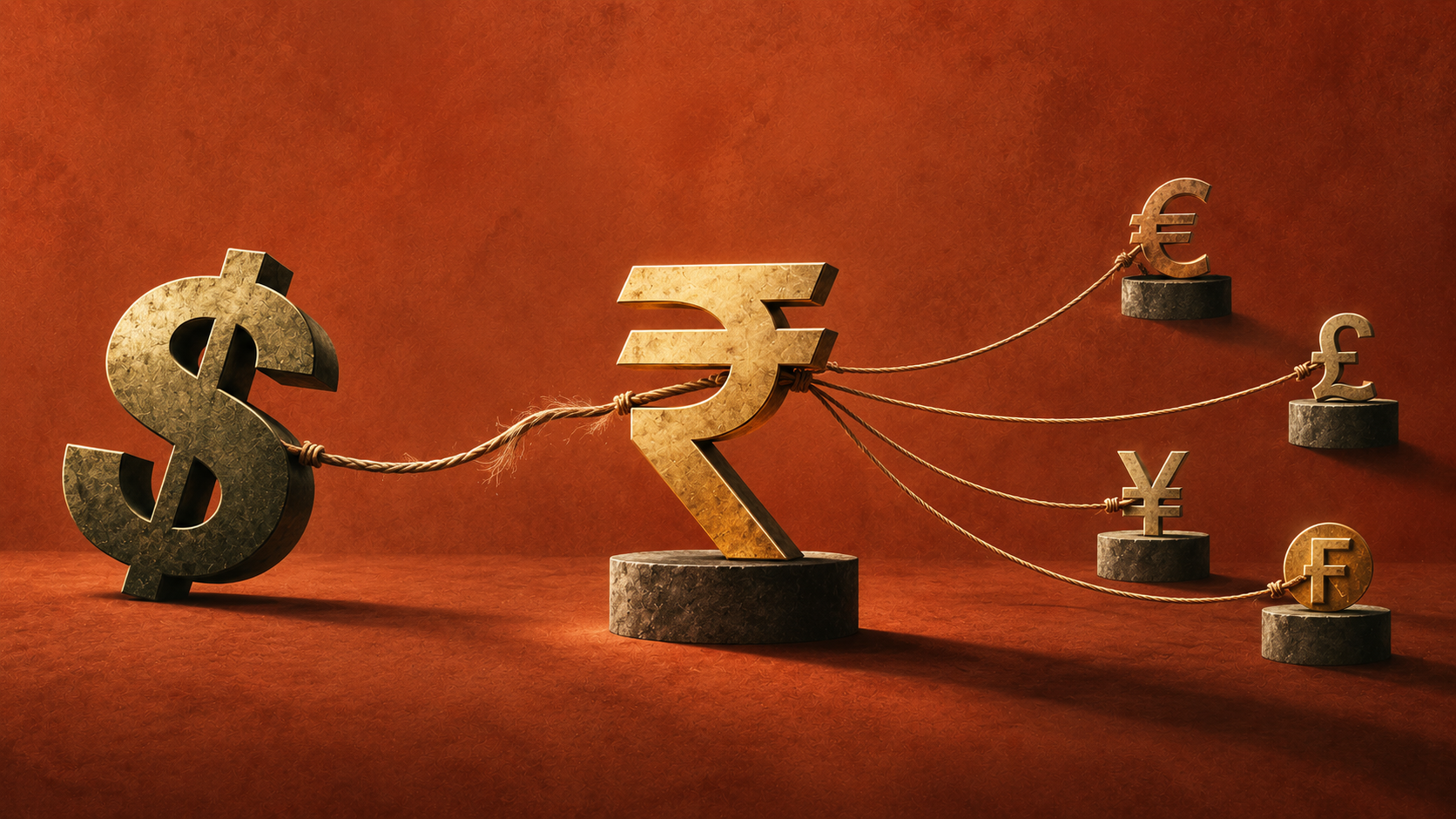
The global financial system is evolving, and one topic gaining attention is how India is impacted by de-dollarization. The US dollar is the dominant currency for international trade and commodity prices and the preferred central bank currency for decades. Countries are now looking into alternatives, however, with the introduction of local currencies for payment and changing the composition of reserve assets. This change will take many years, but it should be noted that it introduces a number of questions for Indian investors.
De-dollarization and India are not subjects of just economists and policymakers. Currency changes affect fuel costs, inflation, interest rates, imports, exports, and the stock market. Being aware of these macroeconomic trends helps in making informed long-term decisions rather than taking the hit from the headlines, whether you're a first-time investor or someone looking to venture into smallcase investments. Green Portfolio thinks that if investors want to maximize their returns from the investments they make, they should get an overview of the situation before choosing a theme or a diversified portfolio.
What Is De-dollarization?
De-dollarization is a process of decreasing reliance on the USD in international trade, financial transactions, and foreign exchange reserves. Countries are increasingly doing business in their own currency and in other major currencies in the world instead of dollars.
For example, if India imports crude oil from another country, the transaction has traditionally been settled in US dollars. Under de-dollarization initiatives, the same trade could be settled in Indian Rupees or another mutually agreed currency.
A Simple Everyday Example
Imagine every shop in your city only accepted one payment app. If more shops began accepting multiple payment apps, customers would have greater flexibility, and dependence on a single platform would decrease. Global trade works in a similar way. The objective is not to eliminate the dollar but to reduce overdependence on it.
Why Are Countries Moving Towards De-dollarization?
Several global developments have encouraged countries to diversify their financial systems rather than relying heavily on one currency.
Some of the major reasons include:
- Reducing exposure to currency-related risks.
- Strengthening domestic currencies in international trade.
- Improving financial independence during geopolitical uncertainty.
- Diversifying central bank reserves through currencies and gold.
- Expanding bilateral trade agreements using local currencies.
This does not mean the US dollar will disappear from global markets. Instead, experts believe multiple currencies may play larger roles alongside the dollar over the coming decades. This gradual transition defines the current India impact of de-dollarization, where opportunities and challenges coexist.
How India Is Impacted by De-dollarization
The discussion around how India is impacted by de-dollarization goes beyond currency exchange rates. It affects several parts of the economy that eventually influence businesses and investors.
1. Oil Imports and Energy Costs
India imports a significant portion of its crude oil requirements. Since oil has traditionally been priced in US dollars, any sharp movement in the dollar directly affects India's import bill.
If more energy trade is settled using alternative currencies, India could experience greater flexibility in managing foreign exchange requirements. Although this will not completely remove currency risks, it may reduce dependence on a single settlement currency over time.
Example:
Suppose India purchases oil worth $1 billion. If part of this trade can be settled using Indian Rupees through bilateral agreements, pressure on dollar demand may reduce during that transaction. Over time, such arrangements can contribute to better trade flexibility.
2. Impact on the Indian Rupee
A gradual shift towards local currency settlements may support the rupee by reducing demand for US dollars in selected international transactions. However, investors should remember that exchange rates are influenced by multiple factors, including inflation, economic growth, interest rates, foreign investment flows, and trade balances.
For individuals planning a smallcase investment, currency stability can indirectly influence corporate earnings, especially for businesses dependent on imports or exports. Rather than reacting to short-term fluctuations, investors should focus on building portfolios aligned with long-term economic trends and a disciplined smallcase investment strategy.
3. Foreign Exchange Reserves and Gold
Another important aspect of de-dollarization and India is the composition of foreign exchange reserves. Central banks worldwide are gradually diversifying reserve assets by increasing exposure to gold and multiple currencies alongside the US dollar.
This trend highlights why many investors monitor gold alongside equities during periods of global uncertainty. While no single asset performs well in every market cycle, diversification remains one of the most effective ways to manage long-term investment risk.
How Does De-dollarization Affect Indian Investors?
While discussions around global currencies may seem distant, the India impact of de-dollarization eventually reaches everyday investors through inflation, interest rates, commodity prices, and corporate earnings. As the global financial landscape evolves, investors should focus on long-term trends rather than reacting to short-term market noise.
For example, if oil prices remain stable due to improved trade flexibility, transportation and manufacturing costs may also remain under control. This can positively influence inflation and business profitability. Such macroeconomic changes often shape sector performance, making it important to follow a disciplined smallcase investment strategy instead of making decisions based solely on headlines.
Key Investment Themes to Watch
Rather than trying to predict currency movements, investors can focus on sectors that may benefit from India's long-term economic growth.
|
Investment Theme |
Why It Matters in a Changing Global Economy |
|
Infrastructure |
Government spending and economic development continue to drive demand. |
|
Defence |
Increasing domestic manufacturing and strategic investments support long-term growth. |
|
Green Energy |
India's renewable energy transition remains a key structural opportunity. |
|
Railways |
Infrastructure expansion improves logistics and industrial development. |
|
Gold |
Often considered a diversification asset during global uncertainty. |
|
Banking & Financial Services |
Growing domestic consumption and credit demand support expansion. |
Instead of searching only for the top smallcase to invest in, investors should understand whether a particular theme aligns with their financial goals, investment horizon, and risk tolerance.
Building a Portfolio during Global Currency Shifts
One of the biggest mistakes investors make is changing their portfolio every time a major global event occurs. A structured approach usually delivers better long-term outcomes than emotional investing.
Before you invest in a smallcase, ask yourself:
- Does this portfolio match my financial goals?
- Am I investing for five years or longer?
- Is the portfolio diversified across sectors?
- Do I understand the underlying investment strategy?
For many beginners, comparing the smallcase minimum investment can also help determine which portfolios fit their budget without compromising diversification.
Investors who prefer market trends may consider a smallcase momentum strategy, while others may favor fundamentally strong businesses with consistent earnings. The right choice depends on personal objectives rather than market popularity.
Why Structure Matters More Than Predictions
Many investors spend hours trying to forecast currencies or global events. In reality, successful investing often depends more on consistency than prediction.
This is where Green Portfolio encourages a goal-based approach instead of chasing short-term opportunities. Whether your objective is wealth creation, retirement planning, or financial independence, investing with a defined process can reduce emotional decision-making.
For investors looking for a good smallcase to invest in, evaluating portfolio quality, sector allocation, historical consistency, and research methodology is often more valuable than focusing only on recent returns.
Looking Beyond Individual Investments
Building wealth is not about finding a single winning stock. It is about following a repeatable process.
As markets evolve, investors increasingly look for ways to smallcase invest in ideas built around long-term themes such as manufacturing, sustainability, infrastructure, quality businesses, and innovation. These diversified baskets help reduce the burden of selecting individual stocks while maintaining exposure to structural growth opportunities.
When comparing options, remember to understand smallcase investment charges, portfolio rebalancing frequency, and investment objectives. These factors contribute to the overall investing experience just as much as returns.
If you're researching the top smallcase to invest in, avoid making decisions based only on social media trends or short-term performance. A diversified portfolio backed by research and aligned with your goals is generally more sustainable over the long run.
Conclusion
The conversation around how India is impacted by de-dollarization is likely to remain relevant as global trade continues to evolve. While the US dollar is expected to remain an important global currency, gradual diversification in trade settlements and reserve assets could reshape international finance over the coming decades.
For investors, the takeaway is simple: avoid reacting to every macroeconomic headline. Instead, focus on diversification, disciplined investing, and long-term wealth creation. Green Portfolio supports this philosophy by helping investors understand market trends and build portfolios around research-driven themes rather than speculation. Whether you are exploring your first smallcase investment or refining an existing portfolio, a structured approach is far more valuable than trying to predict every global event.
People Also Search For
1. What is de-dollarization, and why is it important for India?
De-dollarization is the process of reducing reliance on the US dollar for international trade and reserves. For India, it may improve trade flexibility, support currency diversification, and reduce dependence on dollar-denominated transactions.
2. How is India impacted by de-dollarization?
The India impact of de-dollarization can be seen through oil imports, exchange rate movements, inflation, foreign exchange reserves, and investment sentiment across various sectors.
3. Will de-dollarization strengthen the Indian Rupee?
It may provide some support by increasing local currency settlements in trade, but the rupee will continue to be influenced by inflation, interest rates, trade balances, and foreign capital flows.
4. Should investors change their portfolios because of de-dollarization?
Not necessarily. Investors should focus on diversification, long-term goals, and a disciplined investment strategy rather than making frequent changes based on global macroeconomic developments.
5. How can Smallcases help during changing global market conditions?
A well-designed smallcase investment strategy offers diversified exposure to long-term themes and sectors, helping investors participate in India's growth story while reducing the need to manage individual stocks continuously.
Share this story


Ready to build wealth?
Ready to build wealth?
 Talk to an expert
Share this story



 Talk To An Expert