How Local Currency Trade Affects India
Tuesday, Jun 30, 2026
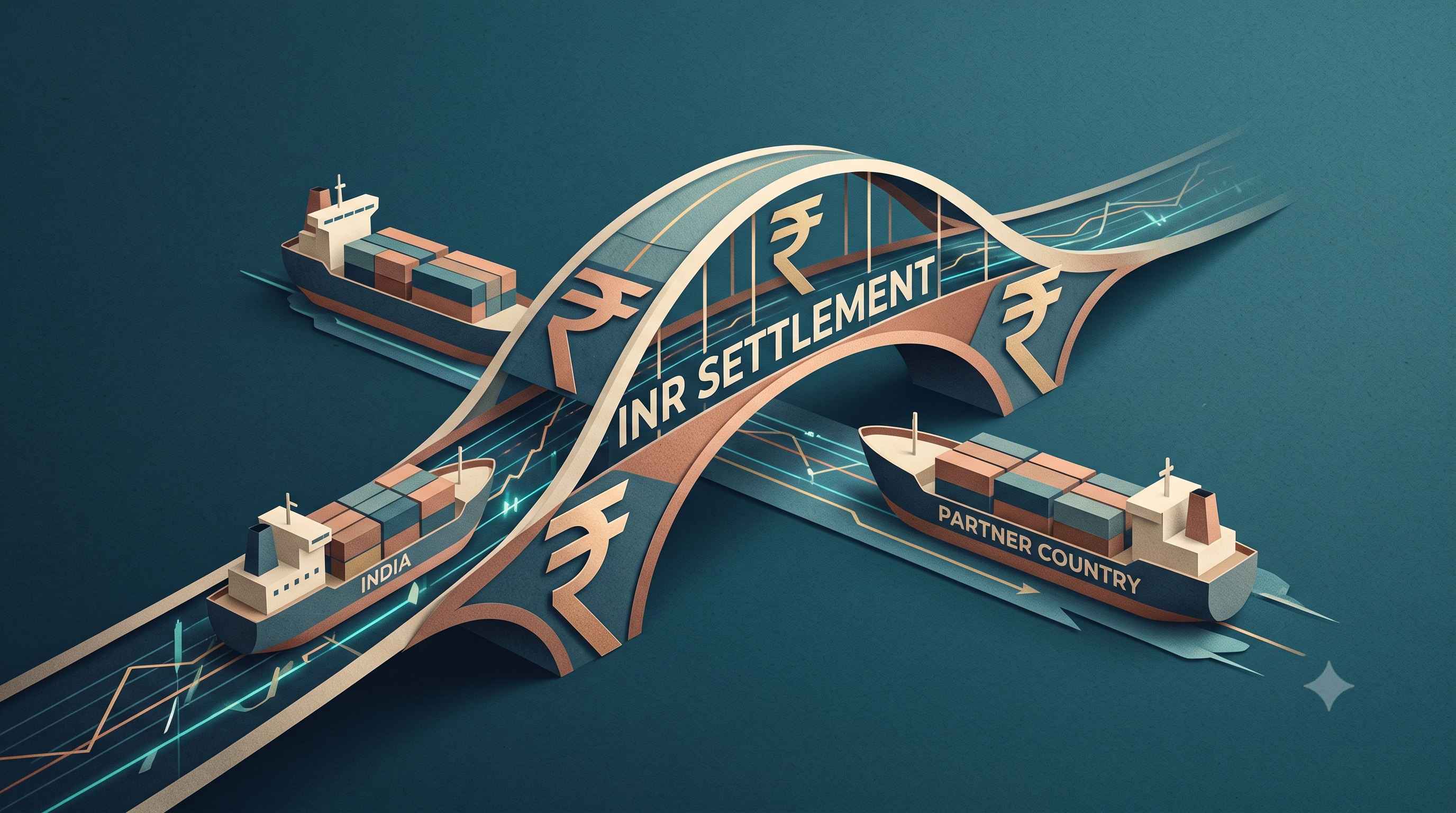
Global trade is changing at an accelerating pace. The US dollar has been the most popular currency used in trade, whether or not the United States is a party to the transaction, for decades. But there is a growing interest in the use of local currency trade agreements to escape the dollar, to cut down on the cost of transactions, and to boost domestic economies.
India is playing its part in this evolution by facilitating trading settlements in Indian Rupees (INR) with some of its counterpart nations. This change might seem like a technical policy adjustment, but its impact is significant and far-reaching for businesses, investors, and the nation's economic development.
Have you ever thought about how local currency trade impacts India? You've come to the proper place. We'll delve into the concept of local currency trade, its importance, and its potential impact on the Indian economy and investment opportunities. Being aware of these macroeconomic factors can help investors avoid reacting to the market headlines and focus on the long-term opportunities. Green Portfolio believes that the first step to informed investing is to ignore short-term market noise and look for structural economic trends.
What Is Local Currency Trade?
Local currency trade means the exchange of imports and exports, a method of settlement that uses domestic currencies of the countries involved, rather than a third-party currency, such as the USD.
Traditionally, most international transactions have been conducted in USD. This means that even if India imports goods from another Asian country, the payment often passes through the US dollar.
With local currency trade, the process becomes much simpler.
For example:
- An Indian company imports goods from the UAE.
- Instead of converting Indian Rupees into US Dollars, the payment is made directly in Indian Rupees through an agreed settlement mechanism.
- The exporting country receives payment under the bilateral arrangement without requiring multiple currency conversions.
A Simple Example
Imagine an Indian automobile manufacturer purchasing components from a supplier in the UAE.
Traditional Settlement
Indian Rupees → US Dollar → UAE Currency
Local Currency Settlement
Indian Rupees → Agreed INR Settlement Mechanism
By eliminating one layer of currency conversion, businesses may save on foreign exchange costs while reducing exposure to exchange rate fluctuations.
Why Are Countries Moving Towards Local Currency Trade?
The growing interest in local currency trade is driven by several economic and strategic reasons.
1. Reduced Dependence on the US Dollar
Many countries want greater flexibility in international trade. Using local currencies allows them to diversify settlement mechanisms instead of relying solely on the dollar.
2. Lower Transaction Costs
Every currency conversion involves banking fees and exchange spreads. Direct settlement in local currencies can reduce these additional costs, making cross-border trade more efficient.
3. Faster International Payments
Fewer intermediary banks and currency conversions often result in quicker settlement times, improving cash flow for businesses engaged in global trade.
4. Reduced Exchange Rate Volatility
Businesses importing raw materials or exporting products face uncertainty when exchange rates fluctuate significantly. Local currency settlements can help reduce some of this exposure.
5. Stronger Bilateral Trade Relationships
Currency agreements often deepen economic cooperation between countries. They encourage long-term trade partnerships while improving financial collaboration.
How Local Currency Trade Affects India
Understanding how local currency trade affects India requires looking beyond headlines and examining the broader economic picture.
1. It Can Strengthen the Indian Rupee
When international trade increasingly uses the Indian rupee, demand for the currency may gradually improve. Greater acceptance of the rupee in global trade can strengthen India's financial position over the long term and enhance confidence in its economy.
While this transition is gradual, wider adoption of INR settlements supports India's aspiration to increase the international relevance of its currency.
2. It Reduces Foreign Exchange Risk
Businesses involved in imports and exports constantly deal with currency fluctuations.
Consider an Indian manufacturing company importing machinery from another country. Under the traditional system, the company must first convert rupees into US dollars before making payment. If the dollar appreciates unexpectedly, import costs rise even if the product price remains unchanged.
With local currency trade arrangements, businesses may face lower currency conversion risk, making budgeting and financial planning more predictable.
3. It Improves Trade Efficiency
Simplified settlement mechanisms can improve operational efficiency for businesses.
Potential benefits include:
- Faster payment processing
- Lower banking and conversion costs
- Improved working capital management
- Easier cross-border transactions
- Reduced administrative complexity
These improvements can make international trade smoother, particularly for companies that frequently import raw materials or export finished products.
4. It Supports India's Global Economic Position
India continues to strengthen its role in global trade through strategic partnerships and expanding economic ties.
Greater adoption of local currency settlements can contribute to:
- Increased confidence in India's financial system
- Stronger bilateral relationships
- Enhanced trade cooperation
- Greater influence in regional and global commerce
While local currency trade alone does not transform an economy overnight, it complements broader initiatives aimed at making India a more significant participant in global markets.
5. It Can Help Manage Import Costs over Time
Although commodity prices depend on multiple factors such as global demand and supply, reducing unnecessary currency conversions can help businesses manage overall transaction costs.
For example, an energy company importing fuel may benefit from more predictable settlement mechanisms if payments are made through local currency arrangements. Lower transaction costs can improve operational efficiency and support long-term profitability.
Traditional Trade vs Local Currency Trade
|
Factor |
Traditional Dollar Trade |
Local Currency Trade |
|
Settlement Currency |
US Dollar |
INR and Partner Currency |
|
Currency Conversion |
Multiple conversions |
Reduced conversions |
|
Transaction Costs |
Higher |
Generally lower |
|
Exchange Rate Risk |
Higher |
Lower |
|
Settlement Speed |
Moderate |
Faster |
|
Dependence on USD |
High |
Reduced |
Which Sectors in India Could Benefit?
Although the impact varies across industries, several sectors may benefit from greater adoption of local currency trade over the long term.
Manufacturing
Manufacturers importing machinery, components, or raw materials could experience lower transaction costs and improved payment efficiency.
Banking and Financial Services
Banks play an important role in facilitating cross-border settlements. As local currency trade expands, financial institutions may develop stronger payment infrastructure and settlement capabilities.
Export-Oriented Businesses
Companies that export products to countries with bilateral currency arrangements may benefit from smoother payment processes and reduced currency-related uncertainty.
Infrastructure
Large infrastructure projects often require imported equipment and long-term contracts. More efficient settlement mechanisms can improve project planning and financial management.
Energy
India imports a significant portion of its energy requirements. Flexible payment arrangements under local currency trade may improve transaction efficiency for energy-related businesses.
Pharmaceuticals
India is one of the world's leading pharmaceutical exporters. Simplified international payment systems can support smoother trade with partner countries while enhancing operational efficiency.
What Does This Mean for Investors?
For investors, understanding how local currency trade affects India is less about predicting short-term market movements and more about recognizing long-term economic trends. When businesses benefit from smoother trade, lower transaction costs, and reduced currency risks, it can support stronger corporate earnings over time.
Green Portfolio encourages investors to focus on macroeconomic developments alongside company fundamentals. A disciplined investment approach backed by research is often more effective than making decisions based on short-term market sentiment.
Why Looking Beyond Headlines Matters
Financial news changes every day, but not every headline deserves an investment decision. For example, a single announcement about a trade agreement may cause temporary market excitement. However, the real impact depends on how businesses, industries, and the economy benefit over the long term.
Building a Disciplined Investment Approach
Rather than picking individual stocks randomly, many investors prefer diversified portfolios built around long-term themes.
A smallcase investment is one such option that allows investors to own a basket of stocks based on a specific strategy or sector. Whether you want exposure to dividend-paying companies, ESG investing, or high-growth sectors, you can invest in smallcase portfolios that match your financial objectives.
A thoughtful smallcase investment strategy can help reduce decision fatigue while providing diversified exposure to carefully selected companies.
Things to Consider Before Choosing a Smallcase
Before investing, evaluate:
- Smallcase minimum investment required.
- Your financial goals and investment horizon.
- Risk appetite.
- Portfolio theme and strategy.
- Smallcase investment charges.
- Whether you're considering a smallcase momentum strategy or another investment approach.
If you're searching for a good smallcase to invest in, a top smallcase to invest in, or a top smallcase to invest in, focus on understanding the investment objective rather than chasing recent returns. Similarly, when exploring smallcase investments in ideas, choose themes that align with your long-term goals instead of short-term market trends.
Conclusion
Local currency trade represents an important step in India's evolving role in global commerce. By reducing dependence on intermediary currencies, lowering transaction costs, and strengthening trade relationships, it has the potential to support India's economic growth over the long term.
Green Portfolio believes successful investing is built on clarity, consistency, and a long-term perspective. Whether you're exploring thematic investing through smallcases or building a diversified portfolio, focusing on a structured investment process can help you navigate changing market conditions with greater confidence.
Frequently Asked Questions
1. How does local currency trade affect India?
Local currency trade can improve trade efficiency, reduce foreign exchange risk, strengthen the Indian rupee's global acceptance, and support long-term economic growth.
2. What is the impact of local currency trade on businesses?
Businesses may benefit from lower transaction costs, faster settlements, and reduced exposure to currency fluctuations during international trade.
3. What is a smallcase investment?
A smallcase investment is a curated portfolio of stocks based on a specific investment theme, sector, or strategy that investors can buy and manage through a single platform.
4. How do I choose a good smallcase to invest in?
Consider factors such as your financial goals, risk tolerance, investment horizon, portfolio strategy, minimum investment amount, and investment charges before making a decision.
5. Why should investors focus on macroeconomic trends?
Macroeconomic trends often shape long-term business growth and sector performance, making them more useful for investment decisions than reacting to short-term market news.
Share this story


Ready to build wealth?
Ready to build wealth?
 Talk to an expert
Share this story



 Talk To An Expert