The New Global Money Map Explained
Sunday, Jul 26, 2026
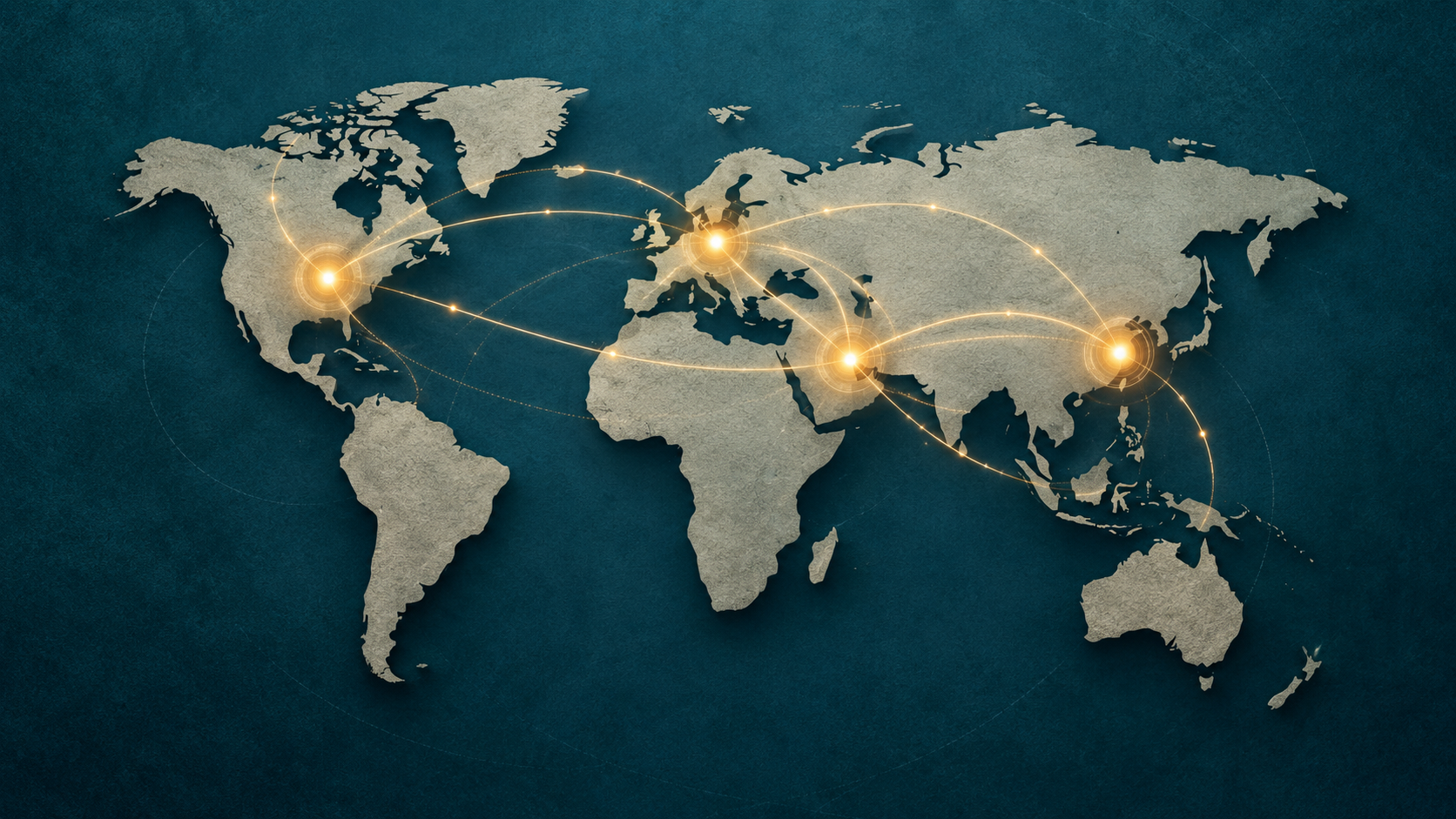
Billions of dollars are traded globally between nations, sectors, and markets every day. These movements have an impact on stock prices, currencies, interest rates, commodities, and even the return for everyday investors. This is why it's more crucial than ever for anyone seeking to invest for a long-lasting advantage.
The financial markets are much more integrated than in the past, and investment results are to a large extent influenced by domestic events. Indian markets can be impacted by a change in interest rates by the US Federal Reserve, a decline in China's manufacturing sector, or a rise in energy prices in Europe within hours or days. As a new global money system emerges, investors should consider both opportunities and threats, but not just market headlines; they should get to know the flow of capital around the world.
These are global trends, and for people looking into smallcase stock trading, it's important to have some context rather than getting swayed by the immediate market changes.
What Is the New Global Money Map?
Global money map simply refers to the comprehension of the global movement of money searching for better opportunities across various countries and asset classes. Sovereign wealth funds, multinational corporations, pension funds, institutions, and investors always invest in places where they are assured of better economic growth, stable policies, high returns, and low risk.
Think of global capital as water flowing through connected rivers. It naturally moves toward places where the environment is favorable. If one economy experiences strong corporate earnings, supportive government policies, and stable inflation, investors often direct more capital toward that market. Conversely, uncertainty or economic weakness may encourage money to flow elsewhere.
Understanding these movements helps investors interpret why certain stock markets, sectors, or industries outperform others over time.
Example
Suppose India introduces policies encouraging renewable energy manufacturing while global investors expect clean energy demand to increase significantly over the next decade. International capital may gradually flow into Indian companies operating in this space, improving liquidity and supporting long-term business growth.
Instead of viewing this as random market behavior, investors who understand the new global money map explained can recognize the larger forces driving investment trends.
What Drives Global Capital Movement?
|
Global Driver |
Why Capital Moves |
Potential Impact on Investors |
|
Interest rate changes |
Investors seek better yields |
Banking, financials, growth stocks |
|
Economic growth |
Capital follows expanding economies |
Broader market participation |
|
Currency movements |
Better purchasing power and returns |
Exporters and importers perform differently |
|
Inflation trends |
Investors rotate across sectors |
Consumer, healthcare, commodities |
|
Technological innovation |
Long-term growth opportunities |
IT, AI, automation, manufacturing |
|
Political stability |
Lower investment risk |
Higher foreign investment confidence |
Why Global Money Flows Matter for Indian Investors
Many investors assume that only Indian economic news influences their portfolios. In reality, domestic markets are closely connected with global financial systems.
Foreign Institutional Investors (FIIs), multinational corporations, global pension funds, and sovereign wealth funds regularly invest in Indian equities. Their decisions often depend not only on India's economic outlook but also on interest rates, inflation, currency movements, and growth prospects across other countries.
When global investors increase their allocation toward emerging markets, Indian equities may benefit from additional capital inflows. Conversely, if investors become risk-averse due to international uncertainty, capital may temporarily shift toward safer assets.
Understanding these relationships enables investors to build a more disciplined smallcase investment strategy instead of reacting to every market correction with fear.
Currency Movements: A Key Piece of the Global Money Puzzle
Currencies play a significant role in determining how money flows across international markets. Exchange rates influence trade competitiveness, foreign investment decisions, import costs, and corporate profitability.
For example, a weaker domestic currency may make Indian exports more competitive in international markets while increasing costs for businesses that depend heavily on imported raw materials. On the other hand, a stronger currency may benefit import-oriented industries but reduce pricing advantages for exporters.
Investors following global macroeconomic trends often consider currency movements alongside sector performance before adjusting their portfolios. This broader perspective helps identify opportunities that extend beyond daily market volatility.
For investors evaluating long-term themes through smallcase investment, combining global economic understanding with disciplined portfolio construction creates a stronger foundation for navigating changing market cycles.
How Global Trends Can Shape Investment Themes
One of the biggest advantages of understanding the global money map explained is recognizing long-term trends before they become mainstream. Instead of chasing daily market news, investors can focus on structural changes that attract global capital over many years. These themes often include renewable energy, artificial intelligence, digital infrastructure, healthcare innovation, manufacturing, defence, and sustainable businesses.
For example, when governments worldwide increase investments in electric mobility and clean energy, companies involved in batteries, renewable power, transmission infrastructure, and engineering may benefit over time. Investors who prefer a diversified approach rather than researching dozens of individual stocks often look at thematic portfolios that align with these trends. Some investors also explore a smallcase momentum strategy when they want exposure to sectors showing sustained market strength, although every strategy should be evaluated based on individual financial goals and risk tolerance.
Turning Global Knowledge into Smarter Investment Decisions
Understanding capital flows is only the first step. The next challenge is converting that knowledge into a practical investment plan.
Many investors search online for terms like good smallcase to invest, hoping to find a ready-made answer. However, there is rarely a single portfolio that suits everyone. The right investment depends on your financial objectives, investment horizon, and ability to handle market fluctuations.
Instead of trying to predict every market movement, investors can build diversified portfolios focused on long-term themes supported by global economic trends. This disciplined approach reduces emotional decision-making and helps investors stay committed during periods of market volatility.
Green Portfolio's Approach to Long-Term Investing
Green Portfolio believes successful investing begins with clarity, discipline, and a structured process rather than chasing short-term returns. Its range of thematic smallcases is designed to help investors participate in different sectors and investment philosophies according to their objectives.
Investors can choose from portfolios focusing on dividend investing, ESG investing, Shariah-compliant investing, automotive growth, small-cap opportunities, pharmaceuticals, smart beta strategies, and the Green Energy, Defence & Railway (GDR) theme. For individuals planning to invest in smallcase, selecting a portfolio should involve understanding the underlying businesses, sector outlook, and investment philosophy instead of relying solely on recent performance.
Important Factors to Evaluate Before Investing
Whether you are a beginner or an experienced investor, understanding the operational aspects of investing is equally important.
Before making a decision, investors should review the smallcase minimum investment required for their preferred portfolio, as different smallcases have different entry amounts. It is also important to understand smallcase investment charges, including platform fees, brokerage, and transaction costs, so that investment decisions are made with complete transparency.
Many investors also compare portfolios while searching for the top smallcase to invest in or the top smallcase to invest in. Rather than selecting purely on historical returns, evaluating portfolio diversification, risk profile, sector allocation, and long-term consistency can lead to more informed decisions.
Building Wealth with a Goal-Based System
Investing becomes far more effective when it is linked to clear financial milestones rather than random stock selection. Green Portfolio extends this philosophy through its GP Roadmaps—a structured framework that evolves as investors progress through different stages of wealth creation.
The ₹25 Lakh "Start Right" roadmap focuses on building disciplined investing habits for beginners. The ₹1 Crore "Build a Core" roadmap helps investors organize scattered portfolios into a more structured framework. For experienced investors, the ₹5 Crore "Scale with Guardrails" roadmap emphasizes wealth protection, risk management, and systematic decision-making.
This milestone-based approach removes uncertainty and encourages investors to smallcase invest in ideas that support long-term financial goals rather than reacting to temporary market sentiment.
Conclusion
Understanding the new global money map explained is about much more than following international news. It helps investors recognize how interest rates, currencies, economic growth, and global capital flows influence investment opportunities across sectors and markets. Rather than attempting to predict every short-term movement, investors can benefit from focusing on diversified portfolios, disciplined investing, and clearly defined financial goals.
By combining global awareness with structured investing principles, Green Portfolio helps investors navigate an increasingly connected financial world. Whether someone is beginning their investment journey or refining an existing portfolio, a process-driven approach supported by research and long-term thinking offers a stronger foundation for sustainable wealth creation.
People Also Search For:
1. What is the new global money map?
The new global money map refers to the way capital moves across countries, industries, and asset classes based on economic growth, interest rates, inflation, currency movements, and investment opportunities.
2. How does the global money map affect Indian investors?
Global capital flows influence foreign investments, stock market liquidity, sector performance, exchange rates, and overall investor sentiment, making them important for Indian investors.
3. What should I consider before choosing a Smallcase?
You should evaluate the investment objective, risk level, portfolio composition, smallcase minimum investment, historical consistency, and smallcase investment charges before investing.
4. How do currency changes impact stock market returns?
Currency appreciation or depreciation affects exports, imports, foreign investments, corporate earnings, and sector performance, which can directly influence stock market returns.
5. Why is goal-based investing better than chasing market trends?
Goal-based investing focuses on long-term financial milestones, disciplined investing, and structured portfolio management, helping investors avoid emotional decisions during market volatility.
Share this story


Ready to build wealth?
Ready to build wealth?
 Talk to an expert
Share this story



 Talk To An Expert