What BRICS Means for Indian Investors
Wednesday, Aug 5, 2026
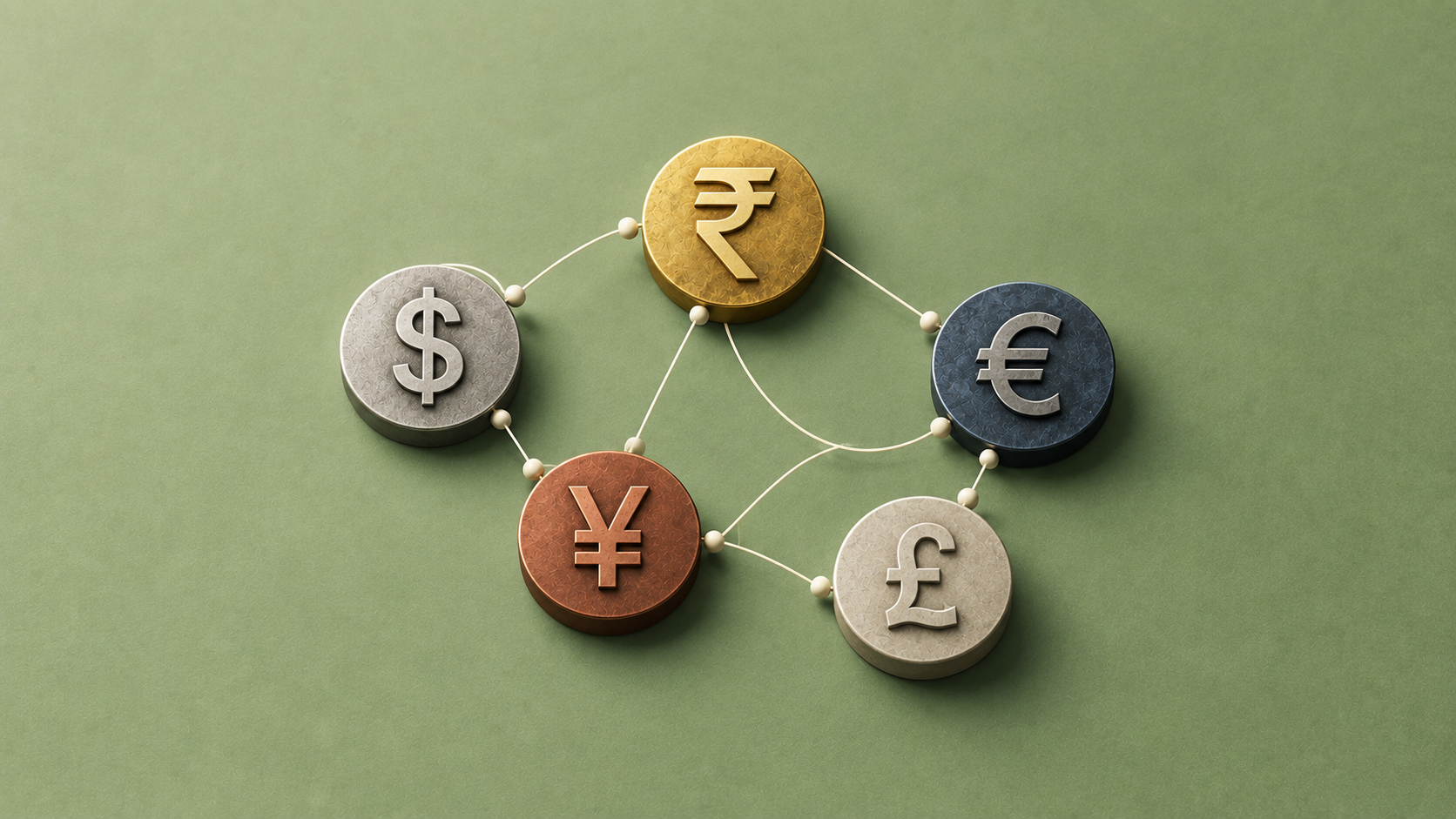
Geopolitical events can be a bit removed from everyday matters of the portfolio for an Indian investor. But the changes in the flow of trade, currencies, and capital can over time affect the Indian companies and markets. This is why the relevance of understanding what BRICS means for Indian investors is increasing.
Initially, BRICS was formed by the members Brazil, Russia, India, and China, followed by South Africa. The group has since grown to a number of other emerging economies. Its increased membership provides more representation in the world of trade, energy, commodities, and developing economies.
But BRICS should not be considered as an economic bloc or a guaranteed alternative to the US dollar one. It is more about it trying to strengthen cooperation among the emerging economies, addressing issues such as trade, development finance, and the use of local currencies.
This raises an interesting query for investors: are there possibilities of India's economic and investment scenario changing with a gradual transition towards more and more acceptance of local currencies?
Why BRICS is important for India?
The BRICS impact on India can be manifested in various ways. India is very much a part of the international trade and relies on the international flow of capital, goods, energy, and technology. Therefore, any positive shift in the way emerging economies conduct business can have an indirect impact on Indian businesses.
One area to watch is trade settlement. If more transactions between BRICS countries are conducted using local currencies, businesses may eventually have more alternatives to transactions routed through the US dollar.
This does not mean the rupee will suddenly replace the dollar. Rather, it could gradually create a more diversified international payments environment.
A Simple Example
Imagine an Indian manufacturer importing a key component from another country.
If the transaction is heavily dependent on the US dollar, fluctuations in the rupee-dollar exchange rate can change the company's import cost. If local-currency settlement becomes more practical, some of that exposure could potentially be reduced.
The outcome would still depend on exchange rates between the two local currencies, pricing, and the company's negotiating power. Therefore, de-dollarization should be viewed as currency diversification rather than automatically assuming lower costs.
Could De-Dollarization Benefit Indian Investors?
De-dollarization is one of the most discussed aspects of BRICS, but it is also one of the easiest areas to misunderstand.
It does not necessarily mean creating a new currency that replaces the dollar. Instead, it can involve greater use of national currencies for trade, alternative payment arrangements, and increased local-currency financing.
The potential benefit is therefore less about predicting the collapse of the dollar and more about understanding whether the global financial system is becoming more diversified.
BRICS and Indian Markets: Where Could Investors Look?
The relationship between BRICS and Indian markets is likely to emerge through sectors rather than through one broad “BRICS trade”.
Infrastructure is one area worth monitoring. Greater cooperation between emerging economies and institutions associated with BRICS could support financing for infrastructure and development projects.
Manufacturing and engineering companies could also benefit if stronger trade relationships create additional demand for Indian products.
Pharmaceuticals, technology services, logistics, and energy are other areas where international trade relationships can influence corporate earnings.
This is where a structured smallcase investment strategy can be useful as a way of thinking about thematic exposure. Rather than selecting individual stocks based purely on a headline, investors can evaluate whether a defined strategy fits their objectives, risk tolerance, and investment horizon.
For someone exploring how to invest in smallcase, the important question should not simply be which theme is currently popular. It should be whether the portfolio's underlying strategy has a clear rationale and whether it complements the investor's broader financial plan.
De-dollarization Could Create Opportunities, But It Is Not Risk-Free
The potential benefits of de-dollarization should be considered alongside its limitations. BRICS countries have different economic priorities, political interests, and financial systems. Reaching agreement on common mechanisms can therefore take time.
Currency risk also does not disappear simply because two countries conduct trade in their domestic currencies. An Indian company receiving payments in another currency may still face exchange-rate fluctuations when converting those earnings into rupees.
For investors, this means BRICS should be treated as a long-term macroeconomic development, not as a short-term trading signal.
A sensible smallcase investment strategy, for example, should begin with an investor's financial objective and risk profile rather than a single geopolitical prediction.
What Could BRICS Mean for Different Sectors?
The effects are unlikely to be uniform across India's economy.
Financial services: Greater use of local currencies and cross-border payment systems could create opportunities for banks and financial infrastructure providers.
Infrastructure: Increased development financing could support companies involved in construction, engineering, transport, and capital goods.
Energy: Changes in international energy trade could influence India's import costs, inflation, and the profitability of energy-related businesses.
Manufacturing: Stronger emerging-market trade could create new export opportunities for competitive Indian manufacturers.
Pharmaceuticals: India's established pharmaceutical industry could potentially benefit from deeper access to emerging-market healthcare demand.
This is why investors looking for smallcase invest in ideas should distinguish between a broad macroeconomic theme and an actual investment thesis. A company may operate in a potentially attractive sector but still be a poor investment if its valuation is excessive, debt is high or earnings remain weak.
Should You Look for a BRICS-Themed Investment?
Not necessarily.
Investors often search for a good smallcase to invest in after reading about a major market trend. But the right portfolio is not necessarily the one connected to the most exciting headline.
Instead, consider:
- Investment horizon: Can you remain invested through periods of volatility?
- Risk tolerance: How much temporary loss can your portfolio withstand?
- Diversification: Are you already heavily exposed to one sector?
- Investment objective: Are you building wealth, preserving capital, or pursuing a specific financial milestone?
- Portfolio discipline: Does the strategy have defined rules for selection and rebalancing?
This approach is particularly important for investors who do not have hours every week to research markets.
A smallcase minimum investment can also differ across strategies, so investors should look beyond the entry amount and understand how the portfolio fits into their overall asset allocation.
Similarly, smallcase investment charges should be considered alongside brokerage, taxation, and other applicable costs rather than evaluating an investment purely on historical returns.
Don't Confuse a Popular Theme with a Guaranteed Winner
Searching for the top smallcase to invest in can be tempting when markets are driven by powerful narratives. But there is no universally best portfolio for every investor.
A strategy focused on momentum may behave very differently from one focused on quality, dividends, small companies, or broad-market exposure. Even a smallcase momentum strategy can experience periods when momentum reverses sharply.
The same principle applies to BRICS.
If de-dollarization progresses faster than expected, some companies may benefit. If implementation remains slow, the investment impact could take years to emerge. If geopolitical tensions increase, certain sectors could even face new risks.
From Market Headlines to a Goal-Based Portfolio
This is where Green Portfolio's broader investment philosophy becomes relevant.
Instead of asking, “Which investment will benefit most from BRICS?” investors can begin with a more useful question:
“What am I trying to build with my money?”
A ₹25 lakh milestone may require a simple, disciplined starting framework. An investor approaching ₹1 crore may need to consolidate multiple investments and remove unnecessary overlap. Someone managing ₹5 crore or more may place greater emphasis on risk management and protecting accumulated wealth.
This goal-first approach helps prevent geopolitical headlines from driving emotional decisions.
Whether an investor chooses a top smallcase to invest in, a diversified portfolio, or another investment route, the underlying principle remains the same: understand the risk, follow a process, and review the portfolio periodically.
The Bigger Picture for Indian Investors
BRICS could contribute to a gradual evolution in global trade and finance, particularly if local-currency transactions, development financing, and economic cooperation expand over time.
But investors should maintain realistic expectations. BRICS expansion does not guarantee higher Indian stock-market returns, and de-dollarization does not automatically make every Indian company a beneficiary.
Green Portfolio can help frame this philosophy around structured, milestone-based investing: instead of constantly asking what the next global headline means for your money, create a system that keeps your investment decisions connected to your long-term goals.
Conclusion: Watch BRICS, But Invest With a Framework
The biggest takeaway is simple: BRICS is important not because it offers investors a single trade, but because it represents a broader evolution in how emerging economies may participate in global commerce and finance.
For Indian investors, the opportunity lies in understanding these structural changes early while maintaining diversification and discipline.
Frequently Asked Questions:
1. What BRICS means for Indian investors in practical terms?
BRICS could affect Indian investors indirectly through trade, infrastructure financing, currency arrangements, energy markets, and capital flows. However, these developments are unlikely to affect every company equally.
2. Can India benefit from BRICS de-dollarization?
India could potentially benefit from greater use of local currencies in selected trade and financing arrangements. It may reduce dependence on dollar-based transactions in certain situations, but it does not eliminate currency or geopolitical risks.
3. How could BRICS affect Indian stocks?
The BRICS impact on India could emerge through sectors such as infrastructure, manufacturing, energy, pharmaceuticals, logistics, and financial services. Investors should still evaluate individual companies on fundamentals and valuations.
4. Is a BRICS-related theme enough to choose a smallcase?
No. A thematic idea should be only one part of the decision. Investors should examine the strategy, holdings, risk level, rebalancing approach, minimum investment, costs, and whether it matches their financial goals.
5. Should I invest in smallcase because of de-dollarization?
Not solely because of de-dollarization. Investors should first determine their objectives, risk tolerance, and investment horizon, then assess whether a particular strategy fits their existing portfolio. A global macro theme should support an investment decision, not replace one.
Green Portfolio's goal-based approach reinforces this distinction: investing is less about predicting every change in the global economy and more about building a process that can withstand those changes.
Share this story


Ready to build wealth?
Ready to build wealth?
 Talk to an expert
Share this story



 Talk To An Expert