What Happens If the Dollar Loses Global Power?
Thursday, Jul 30, 2026
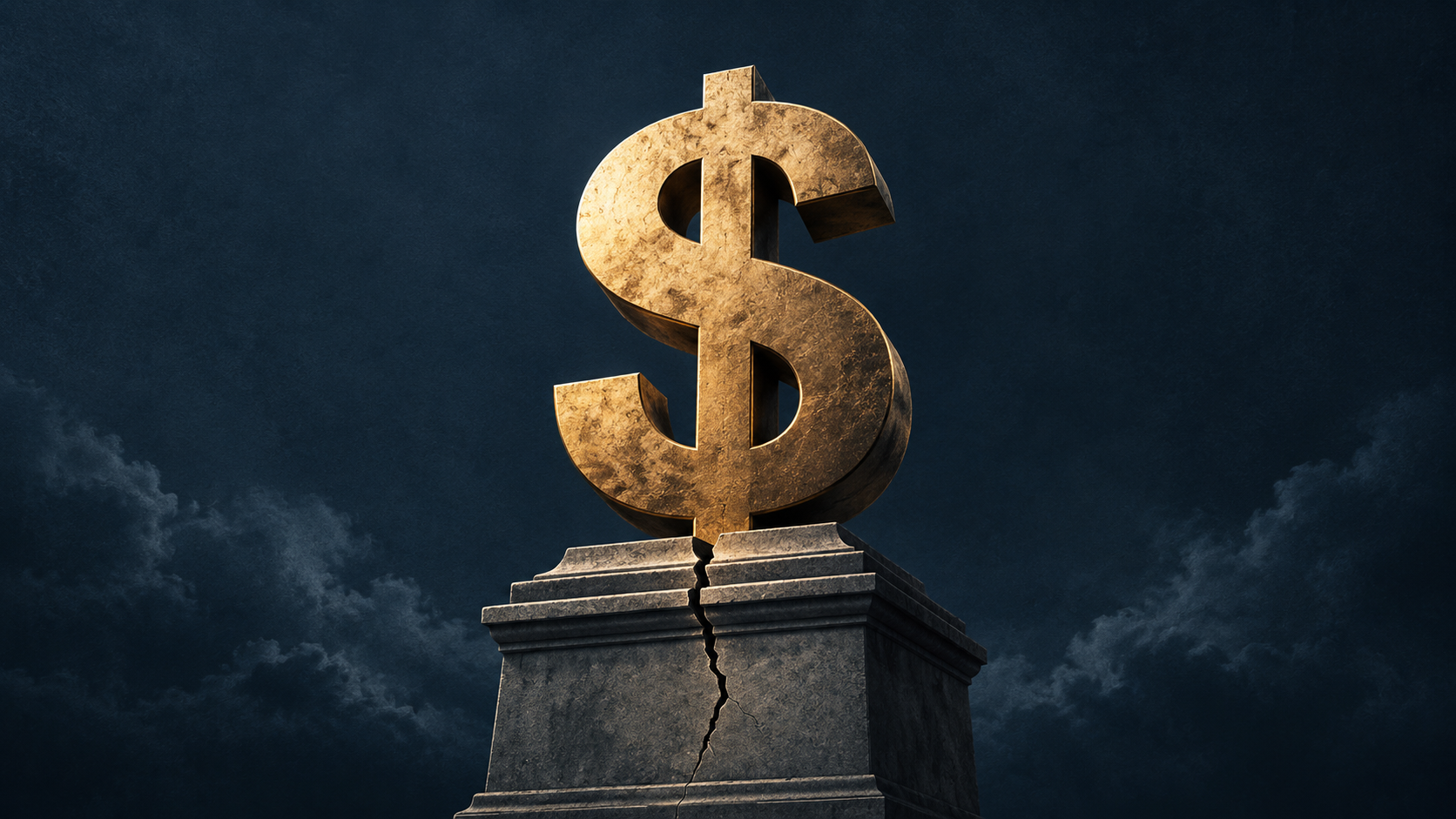
For decades, the dollar has been the mainstay of the global financial system. The dollar has an impact on virtually every economy, ranging from international trade to foreign exchange reserves to commodity prices. But as more countries explore trading in local currencies and diversify their reserves, many investors are asking what happens if the dollar loses global power. Such a change would not happen overnight but could have an impact on global trade, investment flows, and the financial markets, including in India.
Indian investors do not need to foresee a financial crisis. It's a matter of noticing how international patterns can impact local prospects and creating a portfolio that is able to adjust to new economic information. Green Portfolio understands that disciplined investing with knowledge is a much better way to deal with uncertainty than reacting to headlines.
Why has the dollar been so strong?
A reserve currency is a currency in which governments, central banks, and international businesses are confident so that they can trade and do business. This is a result of the strength of the American economy, its very robust financial markets, political stability, and acceptance of the dollar as a global currency.
Today, a company in one country often buys goods from another using US dollars, even if neither country is the United States. Oil, metals, and several agricultural commodities are also priced primarily in dollars, making the currency central to global commerce.
However, changes in geopolitics, international trade partnerships, and growing economic influence from emerging markets have encouraged discussions about what happens if the dollar loses power over the coming decades.
What Does Dollar Losing Global Power Actually Mean?
Many people assume this means the dollar would suddenly become worthless. That is highly unlikely. Instead, dollar losing global power refers to a gradual reduction in its dominance as more countries begin using alternative currencies for trade and reserve holdings.
Some possible developments include:
- More international trade settled in local currencies.
- Central banks diversifying reserves with gold and other currencies.
- Reduced dependence on the dollar for cross-border payments.
- Greater influence of multiple financial centers rather than one dominant currency.
This would represent an evolution of the global financial system rather than an abrupt replacement of the US dollar.
Why Should Indian Investors Care?
Global currency movements affect interest rates, inflation, foreign investments, imports, exports, and stock markets. Even investors who focus only on Indian equities may experience indirect effects.
For example, foreign institutional investors often adjust allocations based on global economic conditions. A well-planned smallcase investment can help investors participate in long-term themes instead of reacting emotionally to short-term global events. Rather than attempting to predict every currency movement, investors should focus on diversification, quality businesses, and consistent investing.
Example: Understanding the Bigger Picture
Imagine three countries conducting international trade.
- Country A settles every transaction in US dollars.
- Country B uses both dollars and euros.
- Country C trades using dollars, local currencies, and bilateral agreements.
If exchange-rate volatility affects the dollar, Countries B and C have greater flexibility because they are not dependent on a single currency. The same principle applies to investing. A diversified portfolio is generally more resilient than one concentrated in a single theme or sector.
This is why many investors follow a disciplined smallcase investment strategy that spreads exposure across industries while maintaining a long-term perspective.
Global Changes That Could Affect Indian Markets
|
Global Development |
Possible Impact on India |
|
More countries trade in local currencies |
Lower dependence on dollar settlements |
|
Diversified global reserves |
Changes in foreign capital flows |
|
Commodity pricing evolves |
Potential impact on inflation and import costs |
|
Currency diversification increases |
New opportunities for Indian exporters |
|
Global investment patterns shift |
Sector-wise opportunities in Indian equities |
As these changes unfold, investors should avoid making decisions based solely on speculation. Those planning to invest in smallcase portfolios should evaluate long-term business quality, investment objectives, and risk tolerance rather than chasing short-term market narratives. Similarly, strategies such as a smallcase momentum strategy may appeal during certain market phases, but they should always align with an investor's financial goals rather than temporary global headlines.
Which Indian Sectors Could Benefit from a Changing Global Currency Landscape?
If the world gradually becomes less dependent on the US dollar, the impact on Indian businesses will vary by sector. Companies with strong domestic demand, limited foreign debt, and sustainable business models could be better positioned to navigate changing global conditions.
For instance, manufacturing, defence, renewable energy, infrastructure, pharmaceuticals, and technology may continue benefiting from India's long-term economic growth irrespective of how international currencies evolve. Instead of searching only for the good smallcase to invest in, investors should evaluate whether the underlying businesses have durable competitive advantages, healthy balance sheets, and consistent earnings potential.
A portfolio built around quality companies often performs better over long investment horizons than one driven purely by short-term macroeconomic news.
Don't Let Headlines Drive Your Investment Decisions
Every few years, global markets face a new concern: trade wars, inflation, geopolitical tensions, or currency debates. While these events create volatility, successful investing usually depends on discipline rather than prediction.
Before choosing a top smallcase to invest in, ask yourself:
- Does this portfolio match my financial goals?
- Can I remain invested during market volatility?
- Is the investment diversified across sectors?
- Am I investing for five years or merely reacting to today's news?
These questions are often more important than trying to forecast currency movements.
Building a Portfolio for Global Uncertainty
Preparing for uncertainty doesn't require predicting the future. It requires following a structured investment process.
Green Portfolio focuses on helping investors build portfolios aligned with long-term wealth creation instead of market speculation. Investors can choose from portfolios based on different themes, sectors, and risk profiles.
Some examples include:
- The 100-Year Portfolio Asset Allocation for conservative investors seeking stability.
- DiviGrowth Capital Dividend Model for investors looking for quality dividend-paying businesses.
- Environment, Social, Governance (ESG) Theme for sustainable long-term investing.
- Smallcap Compounders Fundamental for aggressive investors with a higher risk appetite.
- GDR: Green Energy, Defence, and Railway Tracker for investors interested in India's structural growth themes.
When comparing options, remember that the smallcase minimum investment differs across portfolios. Selecting a portfolio should depend on affordability, financial goals, and investment horizon rather than simply choosing the most popular option.
Likewise, understanding smallcase investment charges helps investors evaluate the overall cost of professional portfolio management while keeping long-term value creation in perspective.
Think Beyond Products, Think about a Wealth System
One of the biggest mistakes investors make is asking, "Which investment should I buy?" instead of "What financial milestone am I working toward?"
That is where GP Roadmaps introduces a structured approach to investing.
Instead of random fund selection, the framework progresses through three stages:
- ₹25 Lakh Start Right: Build investing habits with a simple, goal-oriented portfolio.
- ₹1 Crore Build a Core: Organize existing investments into a structured wealth-building framework.
- ₹5 Crore Scale with Guardrails: Focus on preserving wealth through disciplined risk management and systematic reviews.
This milestone-based philosophy removes emotional decision-making and replaces it with clarity, consistency, and long-term discipline.
Final Thoughts
While discussions around what happens if the dollar loses global power will continue, investors should remember that major economic transitions happen gradually. Markets adapt, businesses evolve, and economies find new equilibrium over time.
Instead of attempting to predict every global development, focus on building diversified portfolios, reviewing investments periodically, and maintaining realistic expectations. Investors exploring smallcase invest in ideas should prioritize themes supported by strong economic fundamentals rather than temporary market excitement. Likewise, identifying the top smallcase to invest in requires understanding your own financial objectives instead of following market trends blindly.
Ultimately, Green Portfolio believes successful investing is built on process, discipline, and patience, not speculation. Regardless of how the global monetary system evolves, investors who remain focused on long-term wealth creation are better positioned to navigate uncertainty with confidence.
People Also Search For:
1. What happens if the dollar loses global power?
If the US dollar loses some of its global dominance, international trade and investments may gradually become more diversified across multiple currencies. The transition is expected to be gradual rather than sudden.
2. Will India's economy benefit if the dollar becomes less dominant?
India could benefit from increased use of the rupee in international trade, greater flexibility in cross-border transactions, and potentially lower dependence on dollar-based settlements. However, the overall impact would depend on global economic conditions.
3. Is it safe to invest during global currency uncertainty?
Market uncertainty is a normal part of investing. Maintaining a diversified portfolio, investing with a long-term perspective, and avoiding emotional decisions are generally more effective than trying to time the market.
4. How can a smallcase investment help during volatile markets?
A smallcase investment provides exposure to curated portfolios based on specific themes or strategies. It can help investors diversify across quality businesses while following a disciplined investment approach.
5. What should investors consider before choosing a smallcase?
Investors should assess their financial goals, risk tolerance, investment horizon, smallcase minimum investment, portfolio strategy, and smallcase investment charges before selecting the most suitable portfolio.
Share this story


Ready to build wealth?
Ready to build wealth?
 Talk to an expert
Share this story



 Talk To An Expert