Why Do Oil, Dollar, and Gold Move Together?
Saturday, Aug 1, 2026
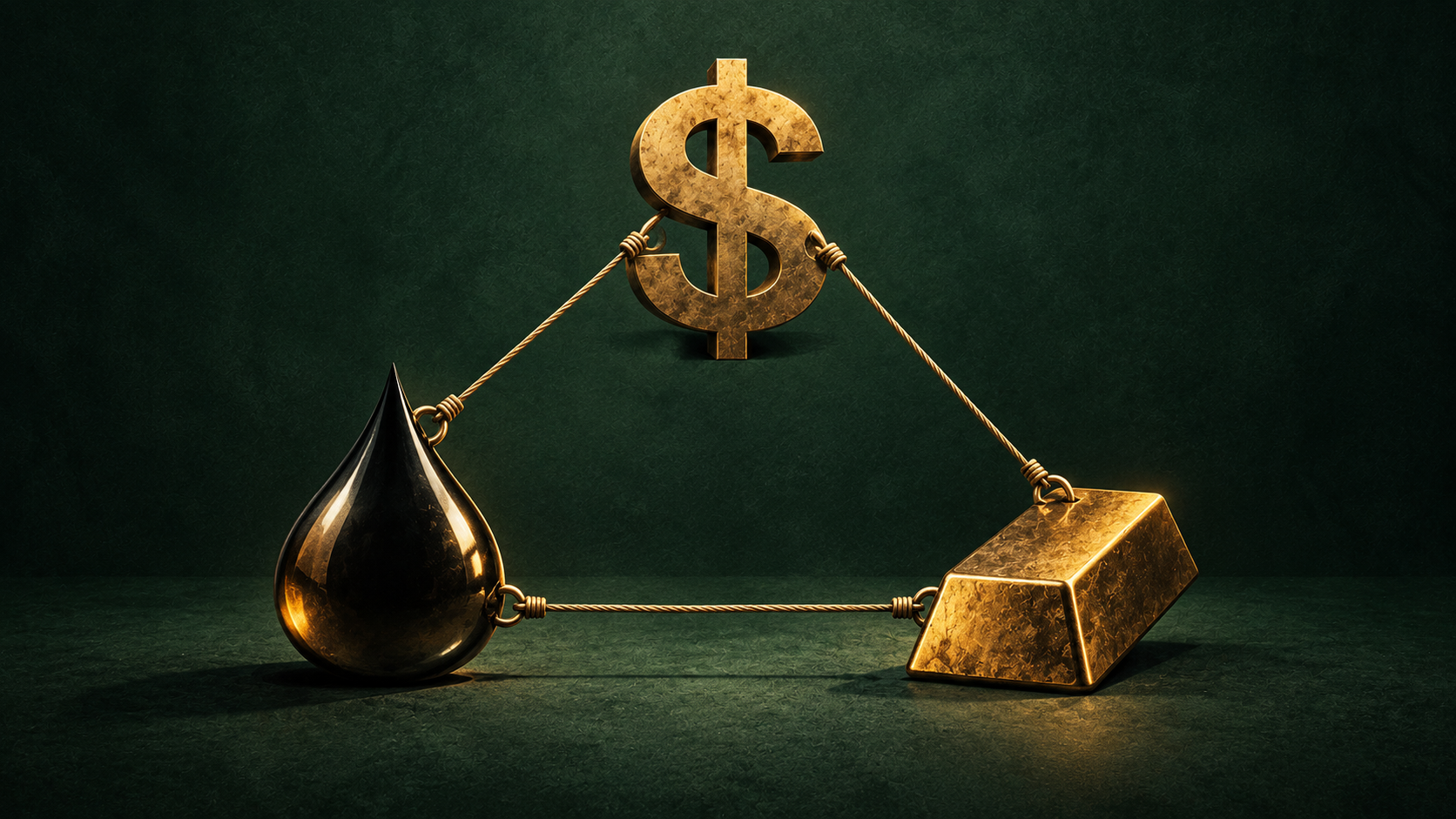
Global financial markets respond to crude oil price movements, US dollar, and gold movements every day. It is during times of geopolitical tensions, inflation reports, or a decision by the central bank that the three assets are usually at the core of the market's conversations. This raises the question, of course, why oil, the dollar, and gold move together, and why do their price movements matter to investors?
While they are all assets, they are tightly connected by international trade, inflation, interest rates, and the actions of investors in oil, the US dollar, and gold. Their actions have a bearing on anything from fuel costs to exchange rates, down to stock market performance. This should help Indian investors to better appreciate the link between the markets and help them adopt a disciplined smallcase investment strategy rather than a knee-jerk reaction when there is a news piece.
Why are Oil, the US Dollar and Gold related?
It is crucial to know the role of each asset in the world economy in order to understand the oil, dollar, and gold relationship.
- Crude oil is the world's most important energy commodity and powers industries, transportation, and manufacturing.
- The US dollar is the dominant global reserve currency and is widely used for international trade.
- Gold is considered a safe-haven asset that investors often prefer during periods of uncertainty.
Because these assets influence economic growth, inflation, and investor confidence, a movement in one can create ripple effects across the others.
A Simple Analogy
Imagine the global economy as a three-wheel gear system.
When one gear starts turning faster, the other two respond.
For example, rising oil prices can increase inflation. Higher inflation may lead central banks to adjust interest rates, which affects the value of the US dollar. A stronger or weaker dollar then influences the attractiveness of gold for global investors. This interconnected mechanism explains why oil and dollar gold move together during many major economic events.
How Oil Prices Influence the US Dollar
One of the strongest relationships in global finance exists between crude oil and the US dollar.
Since crude oil is largely traded in US dollars, countries importing oil need dollars to complete their purchases. As oil prices rise, importing nations often require more dollars, increasing demand for the currency.
Example:
Assume India imports crude oil worth USD 100 billion in a year.
If international oil prices rise by 20%, the import bill increases to USD 120 billion.
Indian importers now need an additional USD 20 billion to pay for the same quantity of oil. This higher demand for dollars can influence currency markets, increase import costs, and put pressure on the Indian rupee.
This is one of the key reasons economists closely monitor the oil-dollar-gold relationship when evaluating global market trends.
Why Gold Often Moves Differently from the Dollar
Gold is widely recognized as a store of value during periods of economic uncertainty.
Because gold is priced internationally in US dollars, changes in the dollar often influence gold prices.
In general:
- A stronger US dollar can make gold more expensive for buyers using other currencies, which may reduce demand.
- A weaker US dollar can make gold relatively more affordable, encouraging higher demand from global investors.
- During financial uncertainty, investors often increase their allocation to gold as a defensive asset.
However, there are situations where both gold and the US dollar rise together. During major geopolitical tensions or financial crises, investors may seek safety in both assets even though they usually move in opposite directions.
Can Oil, the Dollar, and Gold Rise Together?
Many investors believe that one of these assets must fall whenever another rises. In reality, market conditions are often more complex.
The table below shows how different global events can influence all three assets.
|
Global Event |
Impact on Oil |
Impact on US Dollar |
Impact on Gold |
|
Major geopolitical conflict |
Oil prices generally increase due to supply concerns. |
The US dollar often strengthens as investors seek a safe-haven currency. |
Gold prices typically rise as investors look for stability. |
|
High global inflation |
Energy prices usually remain elevated, supporting oil prices. |
The dollar's movement depends on interest rate expectations and central bank actions. |
Gold often gains because it is viewed as a hedge against inflation. |
|
Global economic uncertainty |
Oil prices may fluctuate depending on expected demand. |
Demand for the US dollar generally increases because of its reserve currency status. |
Gold demand usually rises as investors look to preserve wealth during uncertain times. |
Understanding these interactions helps investors interpret global market movements more confidently instead of relying solely on daily news. Rather than attempting to predict every economic event, many investors prefer following a disciplined smallcase investment strategy that focuses on long-term goals, diversification, and consistency. This approach can help reduce emotional decision-making while building wealth over time.
How Does This Relationship Affect Indian Investors?
The connection between oil, the US dollar, and gold is not just a global phenomenon; it directly influences Indian investors and businesses. Since India imports a significant portion of its crude oil requirements, higher oil prices can increase fuel costs, transportation expenses, and inflation. This may reduce consumer spending and impact the profitability of several industries.
Similarly, a stronger US dollar can make imports more expensive and put pressure on the Indian rupee. On the other hand, gold often attracts investors during uncertain periods, making it an important component of a diversified portfolio. Understanding why oil, dollar, and gold move together helps investors better interpret market movements and avoid making emotional investment decisions.
Which Sectors Benefit and Which Face Challenges?
Global macroeconomic trends create both opportunities and risks across different sectors.
|
Sector |
Likely Impact |
Reason |
|
Information Technology |
Generally Positive |
Export earnings benefit from a stronger US dollar. |
|
Pharmaceuticals |
Positive |
Global revenue and exports can improve when the dollar strengthens. |
|
Oil & Gas Exploration |
Positive |
Higher crude prices may support revenues. |
|
Aviation |
Challenging |
Rising fuel prices increase operating costs. |
|
Paint & Chemical Companies |
Challenging |
Higher raw material costs can affect margins. |
|
Logistics & Transportation |
Challenging |
Fuel expenses often rise alongside oil prices. |
Knowing the oil-dollar-gold relationship can help investors understand why certain sectors outperform while others struggle during different economic cycles.
A Simple Portfolio Example
Consider two investors during a period of rising oil prices and global uncertainty.
Investor A has invested only in airline stocks. As fuel costs increase, company profits decline, leading to poor portfolio performance.
Investor B follows a diversified smallcase investment strategy, with exposure to IT, healthcare, energy, and quality businesses across different sectors. While some holdings face temporary pressure, gains in other sectors help balance the portfolio.
This example demonstrates why diversification matters more than trying to predict short-term market movements.
Focus on a Process, Not Predictions
No one can consistently predict when oil prices will rise, when the dollar will strengthen, or when gold will rally. Markets respond to changing economic data, interest rates, geopolitical developments, and investor sentiment.
Instead of chasing headlines, investors should focus on building a disciplined investment process. Many choose to invest in smallcase because they provide access to professionally curated portfolios aligned with different themes, sectors, and investment objectives.
Whether your goal is capital appreciation, dividend income, or thematic investing, selecting a strategy that matches your financial objectives is more valuable than reacting to daily market noise.
Explore Green Portfolio Smallcases for Long-Term Investing
At Green Portfolio, investing is centred around research, discipline, and long-term wealth creation rather than short-term speculation. Green Portfolio Smallcases are designed to help investors participate in quality businesses through diversified themes suited to different risk profiles.
Depending on your objectives, you may consider options such as the ESG Theme, Auto Advantage Tracker, Smallcap Compounders Fundamental, Green Ethical Portfolio, High Quality Right Price Fundamental, Pharma Select Tracker, GDR: Green Energy, Defence & Railway Tracker, or The 100 Year Portfolio.
If you are evaluating a good smallcase to invest, remember that the right choice depends on your investment horizon, financial goals, and risk tolerance, not simply past returns. Before investing, understand the smallcase minimum investment, portfolio strategy, and smallcase investment charges to ensure they align with your financial plan.
Invest with a Goal, Not Just a Product
Successful investing is about building wealth systematically. Green Portfolio also offers GP Roadmaps, a milestone-based framework designed around financial goals instead of random fund selection.
Whether you're working towards your first ₹25 lakh, building a ₹1 crore portfolio, or protecting a larger corpus, the emphasis remains the same: clarity, simplicity, and discipline. Investors looking for the top smallcase to invest in or top smallcase to invest in should begin by defining their objectives before choosing an investment theme.
Rather than following market trends, use smallcase invest in ideas that complement your long-term financial journey. Combined with patience and consistency, a structured investment process can help you navigate changing global markets with greater confidence.
Frequently Asked Questions:
1. Why do oil, the US dollar, and gold move together?
They are interconnected through global trade, inflation, interest rates, and investor sentiment. Changes in one often influence the demand and pricing of the others.
2. How does the oil dollar gold relationship affect Indian investors?
It impacts inflation, fuel prices, exchange rates, corporate earnings, and stock market performance, making it important for investors to understand global economic trends.
3. Is a smallcase investment suitable during market uncertainty?
A smallcase investment can provide diversified exposure to different sectors or themes, helping investors reduce concentration risk while following a long-term investment approach.
4. What should I consider before I invest in smallcase?
Review your financial goals, risk appetite, investment horizon, the smallcase minimum investment, portfolio composition, and applicable smallcase investment charges before making a decision.
5. How do I choose a good smallcase to invest in?
The good smallcase to invest in is one that aligns with your long-term objectives, investment style, and risk tolerance. Rather than focusing only on historical returns, evaluate the investment philosophy, diversification, and consistency of the strategy offered by Green Portfolio.
Share this story


Ready to build wealth?
Ready to build wealth?
 Talk to an expert
Share this story



 Talk To An Expert