Why Investors Move to Gold in Crises
Sunday, Sep 6, 2026
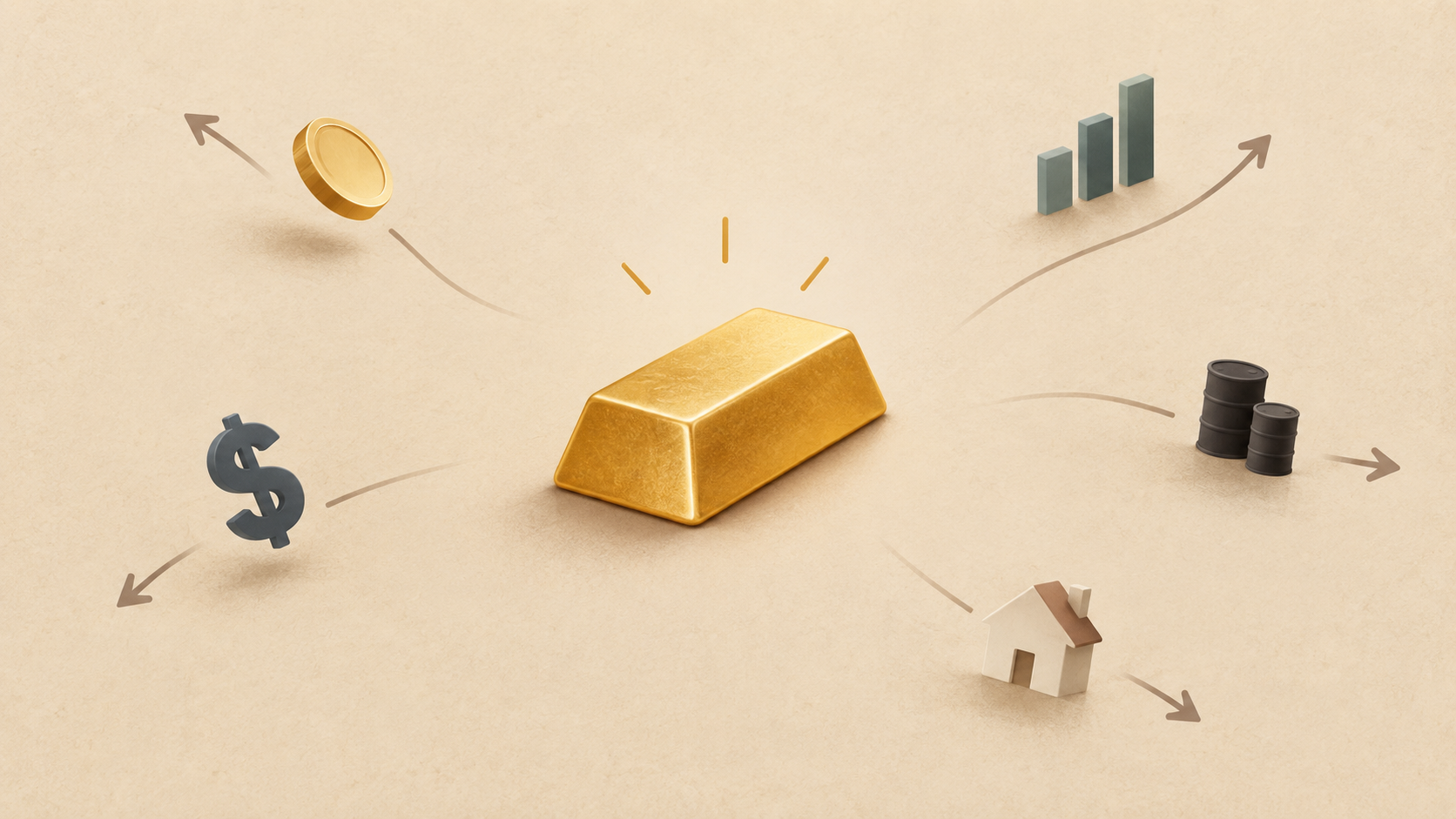
Financial markets seldom go in a straight line. In times of geopolitical stress, inflation worries, banking stress, or economic uncertainty, investors may change their tune about what they're comfortable with holding in their portfolios. Share values can fluctuate, investors' attitudes can sour, and preserving hard-earned investments can grow more critical.
This is where the matter of "why investors purchase gold in crisis" becomes relevant. Gold has been a popular investment when markets are uncertain, as investors have seen it as something that can diversify a portfolio, rather than relying on a specific company's earnings.
An investor having experience of equity investment might find this unusual. Why go towards an asset that pays nothing in dividends or regular interest? The answer is partly to do with investor psychology. If the priority shifts from growth to uncertainty management, a desirable asset changes as well.
Green Portfolio is based on a much larger idea than just buying and selling stocks, which is that the direction of investments should be related to individual investor objectives, and a process should be used instead of a whim of the day.
Why Does Gold Attract Investors During a Crisis?
Gold and the Psychology of Safety
During normal market conditions, investors tend to focus on growth, earnings, and compounding. A crisis can change those priorities. Suddenly, preserving capital, maintaining liquidity, and reducing concentration risk become much more important.
This helps explain the long-standing perception of gold as safe haven.
Gold is not tied to the financial performance of a single company. It is a globally recognized asset with a long history of being used as a store of value. These characteristics can make it psychologically attractive when confidence in financial markets is weakening.
However, calling gold a safe haven does not mean it is risk-free. Its price can decline, sometimes sharply, depending on interest rates, currency movements, inflation expectations, and investor demand.
What Makes Gold Different From Stocks?
Different Assets, Different Drivers
Owning a stock means owning a stake in a business. Its valuation can be influenced by revenue growth, profitability, debt levels, competition, management decisions, and expectations about the economy.
Gold works differently.
Its price can respond to interest-rate expectations, inflation concerns, currency movements, central-bank activity, and global investor sentiment. Because these drivers are different from those influencing individual companies, some investors use gold to diversify portfolios that are heavily concentrated in equities.
Consider two investors, each with ₹10 lakh:
|
Investor |
Portfolio |
Potential Role |
|
Investor A |
₹10 lakh in equities |
Primarily growth-oriented |
|
Investor B |
₹8 lakh equities + ₹2 lakh gold |
Growth + diversification |
If equity markets experience a correction, both investors can lose money. The difference is that Investor B has exposure to another asset whose price may respond differently to the same economic environment.
That is the essence of diversification: not eliminating losses, but avoiding dependence on a single source of risk.
What Happens to Gold During Market Panic?
Fear Can Change Demand
The behavior of investors becomes particularly important during periods of severe uncertainty. Gold during market panic may attract additional attention as investors search for assets perceived to offer stability or diversification.
But the relationship is not mechanical. Gold does not automatically rise whenever stock markets fall. During an intense sell-off, investors may sell even gold to generate cash or meet obligations. Conversely, expectations of changing interest rates or inflation can influence gold demand independently of equity-market movements.
This is why investors should avoid treating gold as a guaranteed crisis hedge.
Instead, the better question is:
What role should gold play within my overall financial plan?
For investors following a structured smallcase investment approach, this distinction is particularly important. An equity strategy and a gold allocation may have completely different purposes. One can focus on long-term business growth, while the other may contribute to diversification.
The objective is not to predict the next crisis. It is to build a portfolio that does not require an investor to make emotional decisions every time markets become uncomfortable.
Gold vs. US Dollar: Which Makes More Sense during a Risk-Off Phase?
When markets become uncertain, investors often look beyond gold and consider another defensive option: the US dollar. For Indian investors, this comparison is particularly relevant because movements in the USD/INR exchange rate can affect the value of dollar-denominated assets.
The dollar is a major global reserve currency and can attract demand when investors seek liquidity. Gold, meanwhile, is generally considered for a different reason: diversification and its potential role as a store of value.
This means the question should not simply be, “Should I hold gold or dollars?” Instead, investors should ask what problem they are trying to solve.
|
Factor |
Gold |
US Dollar |
|
Primary role |
Diversification and store of value |
Currency and liquidity exposure |
|
Indian investor consideration |
Gold price + INR movement |
USD/INR movement |
|
Regular income |
No regular interest |
Dollar-based instruments may generate interest |
|
Major influences |
Rates, inflation, demand and sentiment |
US monetary policy, global liquidity and currency demand |
Does Every Investor Need Gold?
There is no universal percentage of gold that suits every investor. The appropriate allocation depends on factors such as age, income stability, existing investments, financial goals, risk tolerance, and investment horizon.
A young professional with a long investment horizon may have greater capacity to tolerate equity volatility. A mid-career investor managing family responsibilities may place greater emphasis on diversification. An HNI or UHNI with substantial accumulated wealth may be more focused on protecting capital and controlling portfolio-level risks.
The important lesson is to avoid building an allocation around headlines.
This is also where a smallcase investment strategy needs to be understood in context. A structured equity portfolio can have a long-term growth objective, while gold can potentially play a different role within overall asset allocation.
Don't Chase the Best-Performing Asset
Crisis periods can create a powerful temptation to chase whatever has recently performed well. An investor may see gold rising and immediately decide that gold is the answer. Another may search for the top smallcase to invest in after seeing a particular equity strategy outperform.
Both reactions can lead to the same mistake: confusing recent performance with future suitability.
Before deciding to invest in a smallcase, investors should consider the strategy, portfolio construction, risk profile, time horizon, and costs. Smallcase minimum investment requirements and smallcase investment charges can also be part of this evaluation.
Should Investors Use Momentum During Uncertain Markets?
Different investment approaches respond to markets differently. A smallcase momentum strategy, for instance, attempts to participate in prevailing price trends. That is fundamentally different from holding gold as a diversification asset.
This does not make one approach universally superior.
It simply highlights an important investing principle: different strategies are designed to solve different problems.
Build the Portfolio Before the Crisis Arrives
The strongest crisis strategy is often preparation rather than prediction.
Green Portfolio's GP Roadmaps illustrate this goal-first philosophy through three wealth milestones:
- ₹25 lakh - Start Right: establish disciplined investing habits.
- ₹1 crore - Build a Core: organise and structure a growing portfolio.
- ₹5 crore - Scale with Guardrails: focus on risk management and protecting accumulated wealth.
Investors may encounter many smallcase invest in ideas, but the right choice should ultimately depend on whether an investment fits their objective and overall portfolio.
Five Questions to Ask Before Buying Gold
Before increasing gold exposure during a crisis, ask:
- Why am I buying gold? Is it diversification, inflation concern, currency concern, or simply fear?
- How much gold exposure do I already have?
- Can I tolerate a decline after purchasing it?
- Am I responding to a plan or reacting to headlines?
- Does the decision support my broader financial goals?
This framework can prevent an emotional decision from becoming a long-term portfolio problem.
Final Takeaway: Gold Is a Tool, Not a Crisis Button
Investors turn towards gold during crises because it is widely perceived as a store of value and can offer diversification from traditional financial assets. But it is not guaranteed to rise whenever markets fall.
The same applies to dollars. Currency exposure can serve a different purpose from gold and should be evaluated according to the investor's objective.
The broader lesson is simple: successful investing is less about finding one asset that will survive every crisis and more about creating a portfolio with a clear role for each component.
Green Portfolio reflects this goal-first approach: build with clarity, follow a process, and avoid letting short-term fear dictate long-term financial decisions.
People Also Search For:
1. Why does gold rise during a financial crisis?
Gold can attract investors during financial crises because it is widely perceived as a store of value and can diversify portfolios exposed to equities and other risk assets. However, gold does not necessarily rise during every crisis and can experience short-term volatility.
2. Is gold a safe investment during a recession?
Gold may provide diversification during a recession, particularly when investors are concerned about economic uncertainty, inflation, or financial instability. However, it is not risk-free, and its performance depends on factors such as interest rates, currency movements, and investor demand.
3. Is gold better than the US dollar during a market crash?
Neither is automatically better. The US dollar provides currency exposure and liquidity, while gold may serve as a diversification and store-of-value asset. For Indian investors, the USD/INR exchange rate is an important consideration when evaluating dollar exposure.
4. Should you buy gold when the stock market falls?
A falling stock market alone should not be a reason to buy gold. Investors should first consider their existing gold allocation, financial goals, risk tolerance, and overall asset allocation rather than making an emotionally driven decision.
5. How does gold protect a portfolio during inflation?
Gold is often considered a potential hedge against inflation because investors may turn to tangible assets when they are concerned about declining purchasing power. However, gold's relationship with inflation is not guaranteed in every period, so it should be viewed as one component of a diversified portfolio rather than a standalone inflation solution.
Share this story


Ready to build wealth?
Ready to build wealth?
 Talk to an expert
Share this story



 Talk To An Expert